
How Eye Strain and Tech Neck Are Connected (and 3 Ways to Fix Both)
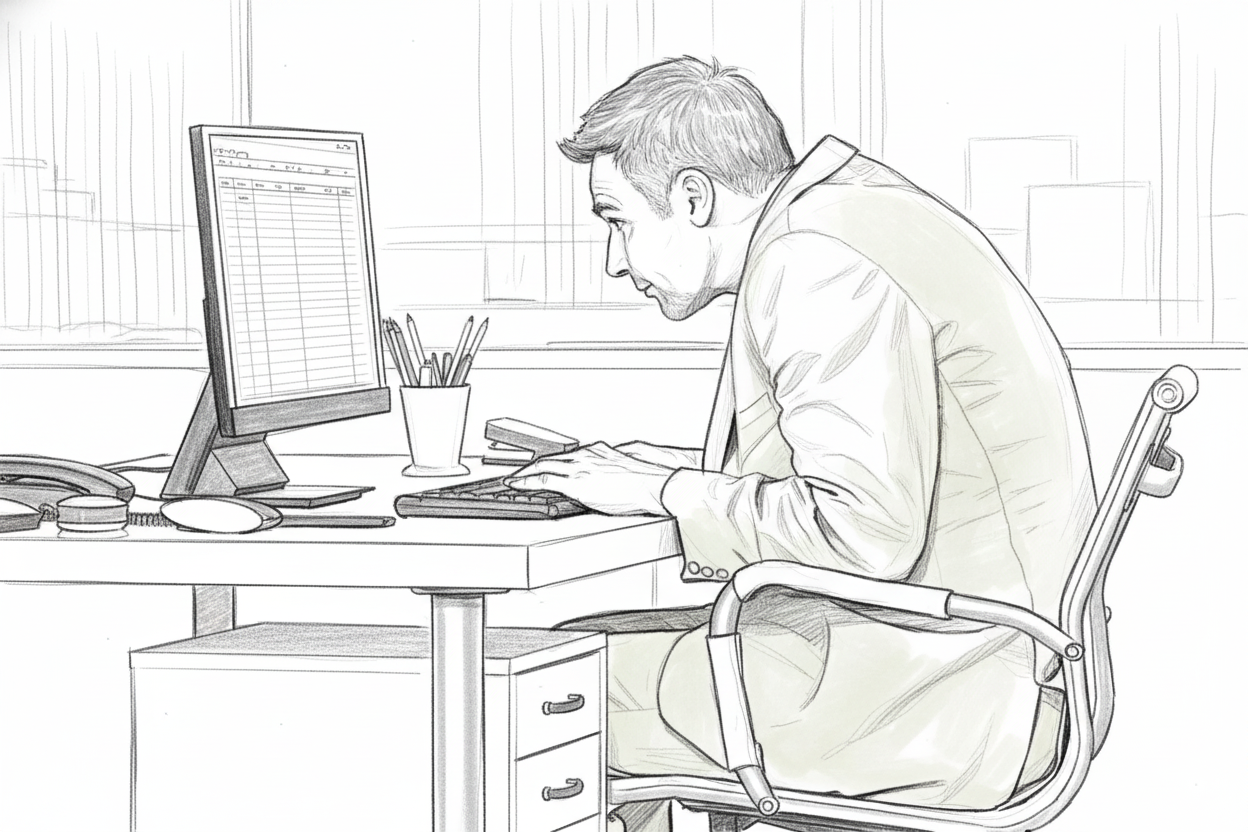
Let me tell you about Aaron.
Aaron is a finance consultant; also a cyclist. On weekdays he works on financial models and client pitches, while his early mornings and weekends are spent training. Three weeks ago, a minor pile-up during a training sprint left him with shoulder ache. The X-rays were clean, so he brushed it off as "minor stiffness." Rest, he figured, would fix it.
But then, work got crazy because they were closing a huge client. For weeks, Aaron was glued to his desk, hunched over auditing sheets for 10+ hours a day. The stiffness didn't fix itself; it started to morph. The old shoulder ache found a new, terrifying companion: severe neck pain.
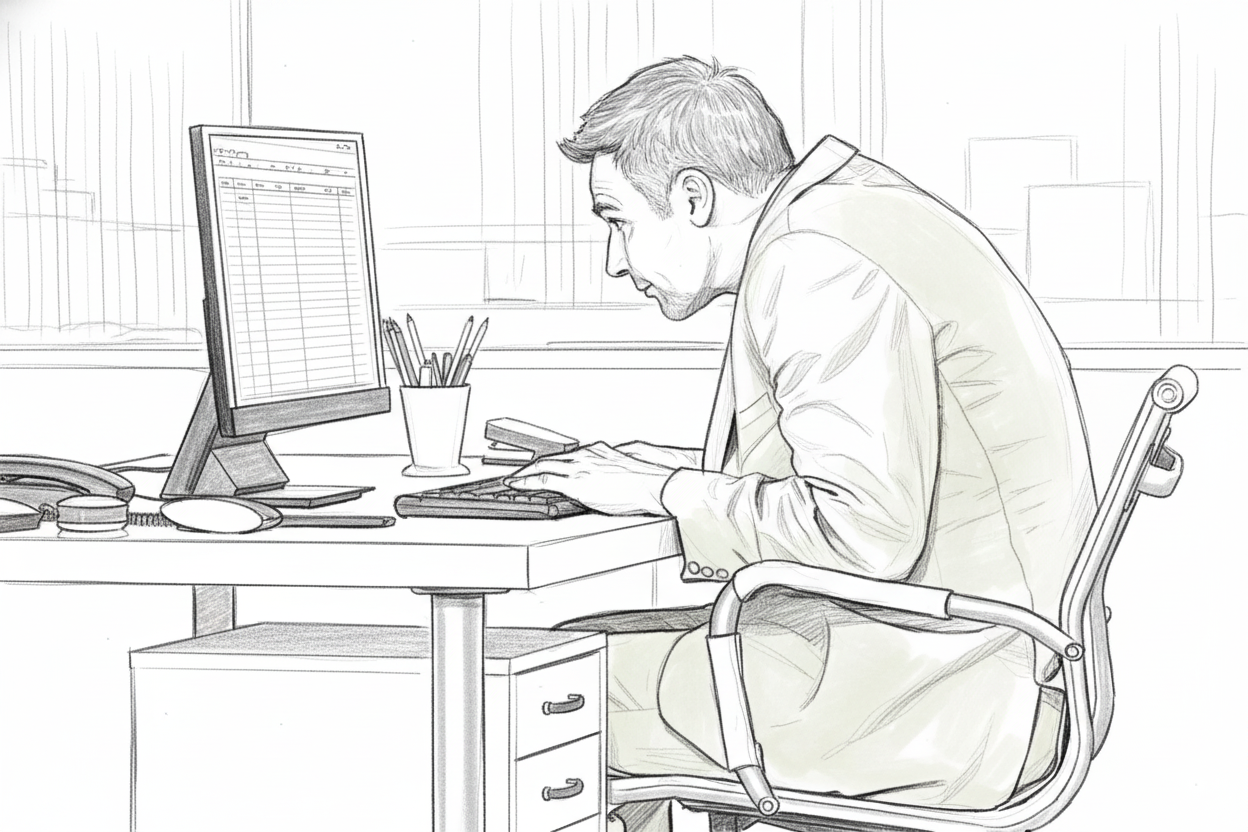
But it wasn't just a stiff neck. It was a throbbing pain that started at the base of his skull and radiated down his neck. Aaron couldn't turn his head without wincing, and he certainly couldn't train. So he stopped riding completely. That desk, once a place of professional triumph, became a torture rack, leaving him feeling completely stuck.
If you’ve ever felt how even an act of turning your head is causing pain, you know where Aaron is. This isn't just about a bad chair; it's about a fundamental conflict between our physical needs and the demands of modern screen life.
However, the solution isn't rest; it's understanding the biomechanics of screen life and actively correcting the muscular imbalance.
The Problem: When Your Eyes Dictate Your Hunch
Why do we slouch? Because when we focus intensely on a screen, especially when we experience visual discomfort (Computer Vision Syndrome), we instinctively lean in. This craning motion forces our head forward, initiating Forward Head Posture (FHP). However, the problem is bigger than just the neck. This act of leaning in causes the shoulders to roll forward and the upper chest to collapse, creating the full upper-body dysfunction known as Tech Neck.
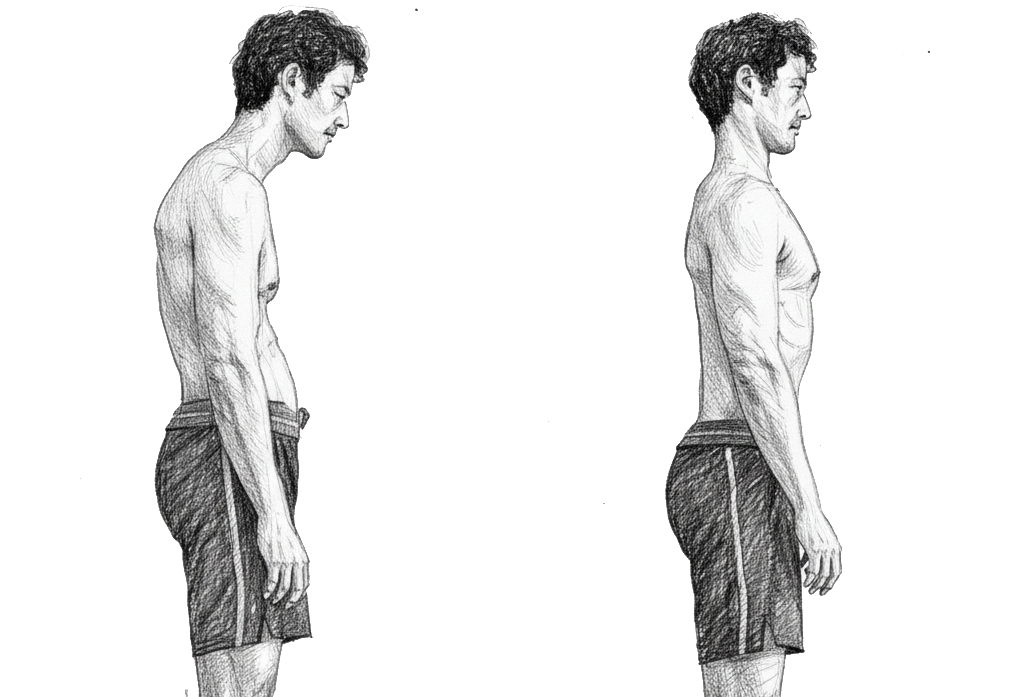
When you lean your head forward, the biomechanical cost is enormous.
Your head weighs about 10-12 pounds in a neutral position, but for every inch it juts forward, the effective weight on your cervical spine muscles increases dramatically. It's like strapping a 60-pound dumbbell to your neck just to read an email.
This isn't a minor cosmetic issue; it's a structural breakdown.
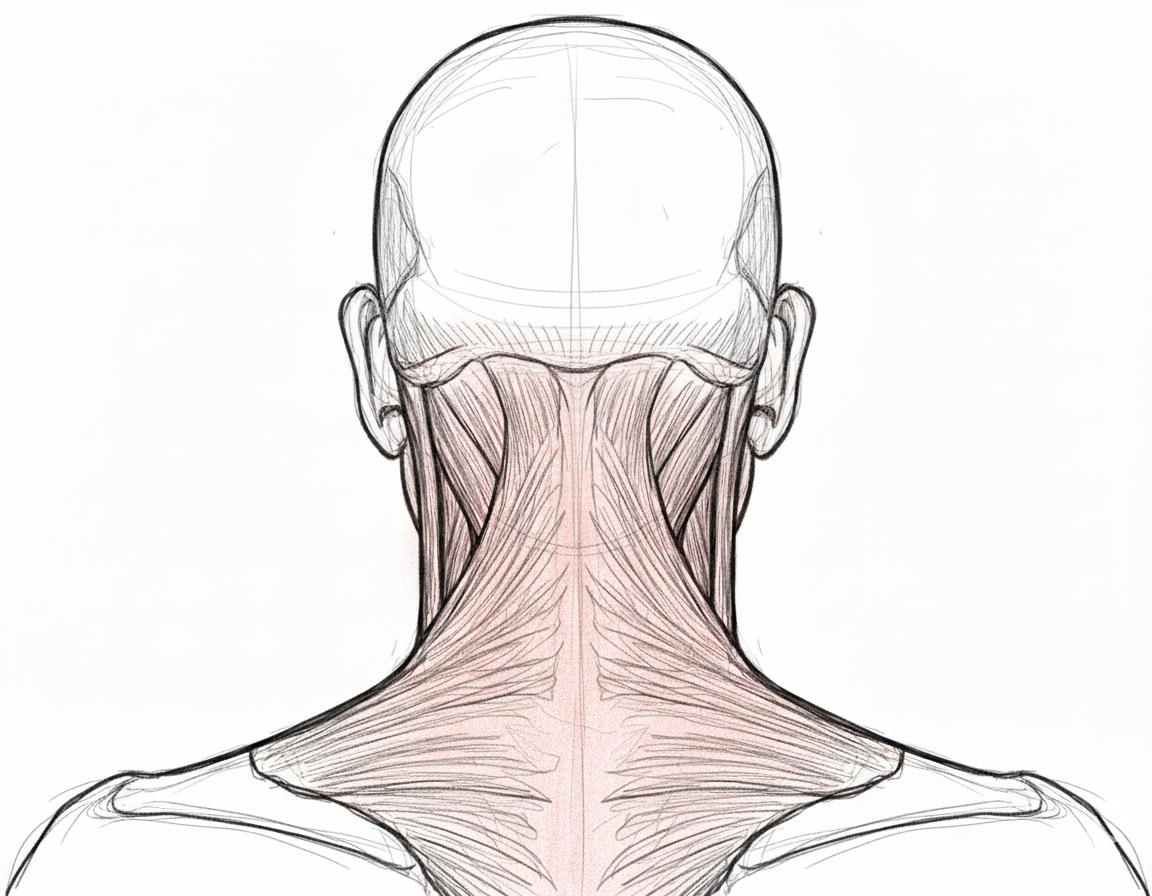
Forward Head Posture puts the upper cervical spine into extension and the lower spine into flexion, leading to an increased neck curve (hyper-lordosis). This biomechanical shift causes the muscles in the back of your neck (the extensors) to shorten and become tight, while the deep muscles in the front of your neck (the flexors/stabilizers) become weak. Prolonged sitting in this static, non-neutral posture is a known occupational risk factor for neck pain. This sustained position starves the muscles of energy, leading to lactic acid accumulation, which causes the neck pain and tightness you feel.
Studies show that a smaller cranio-vertebral (CV) angle, which is the physical measure of how far your head juts forward, is significantly correlated with greater neck pain intensity and resulting disability.(1) Furthermore, when your neck stiffens, your shoulders round forward, leading to tension and upper back tightness.
To fix the pain, we need to correct the posture, and that requires stretching the tight muscles and strengthening the weak ones.
The Two Sides of the Imbalance: Tightness vs. Weakness
When we fall into Forward Head Posture, two key things happen to our musculature:
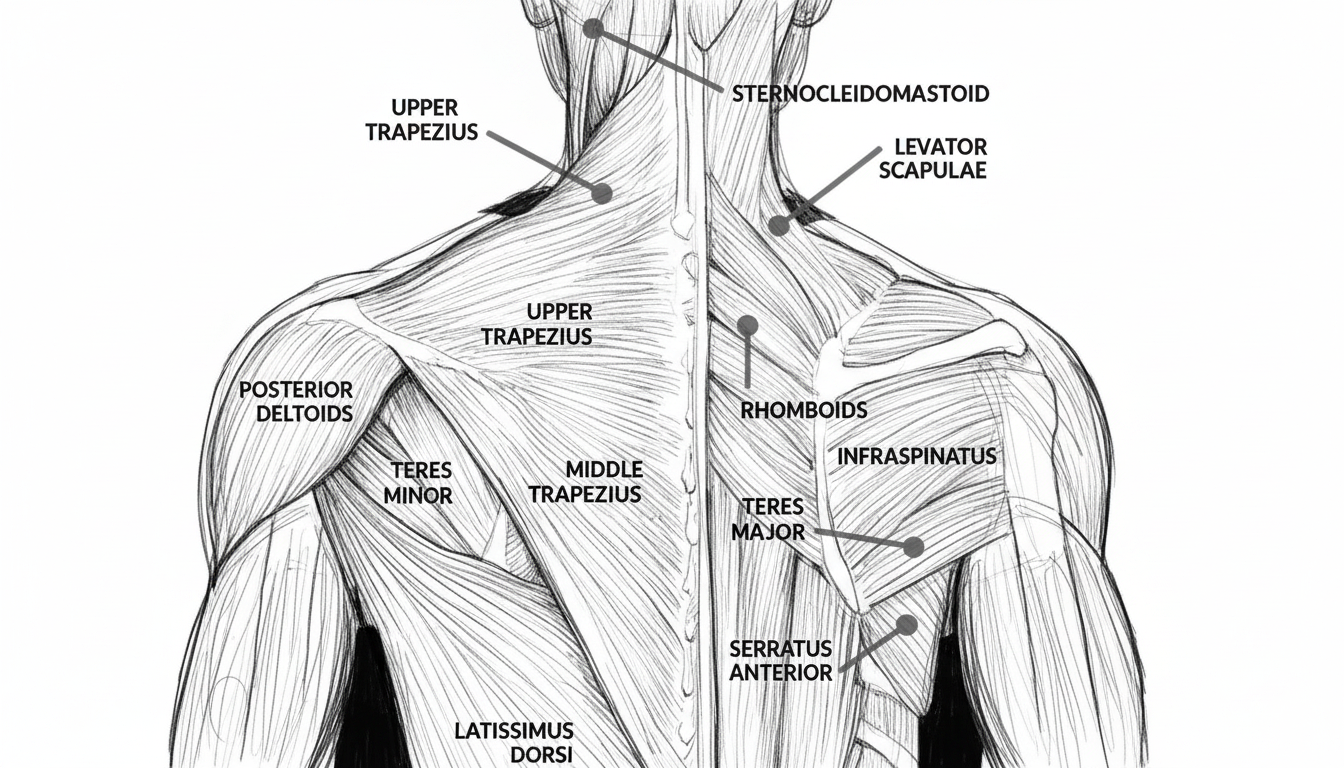
1. The Muscles That Get Tight and Overworked
These muscles are constantly stretched and stressed, leading to painful knots and tension headaches. They are desperately trying to hold up the excessive weight of your forward-jutting head.
- Upper Trapezius (Traps) and Levator Scapulae: The large muscles that connect your neck, shoulders, and back. They take the brunt of the tension, resulting in the classic shoulder and neck "knots."
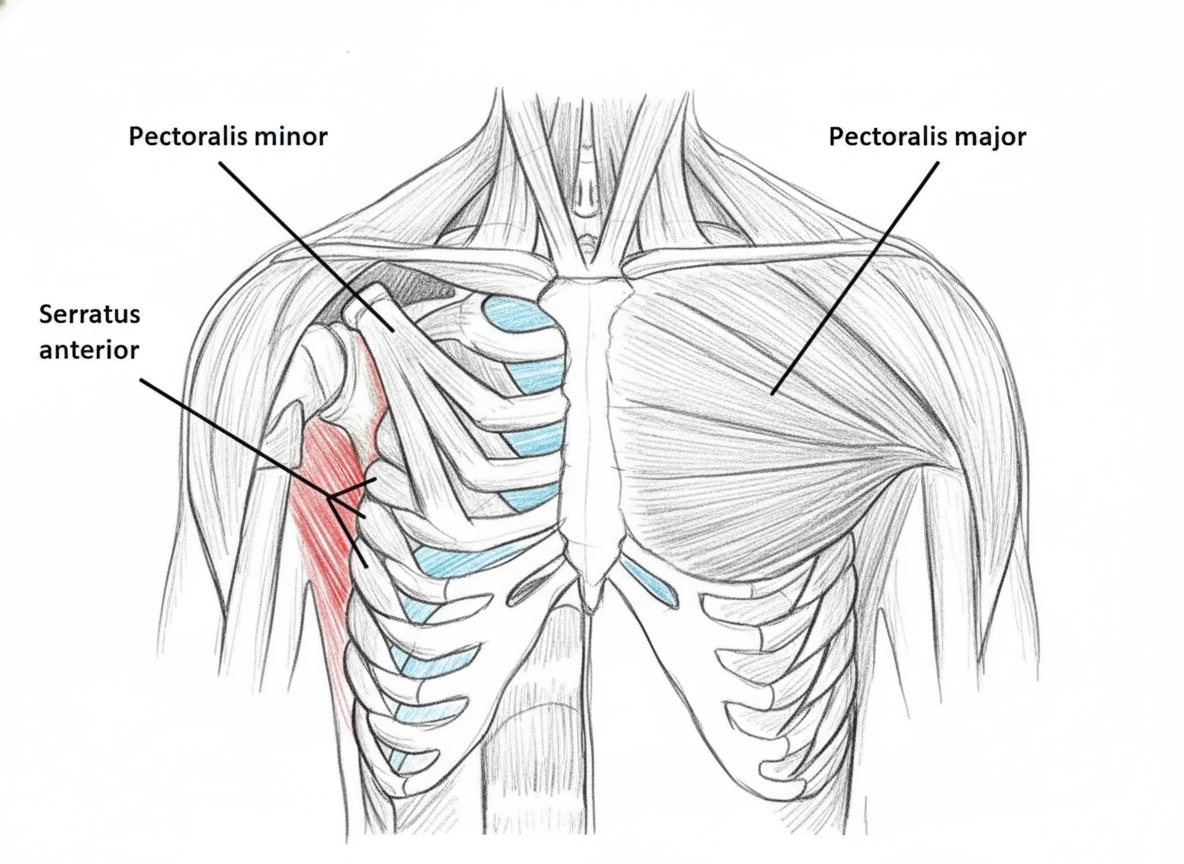
- Pectoralis Minor: Located deep in the chest, this muscle shortens from the hunching action. Along with the larger Pectoralis Major, it actively pulls the shoulder blade forward, further cementing the forward head and rounded shoulder position.
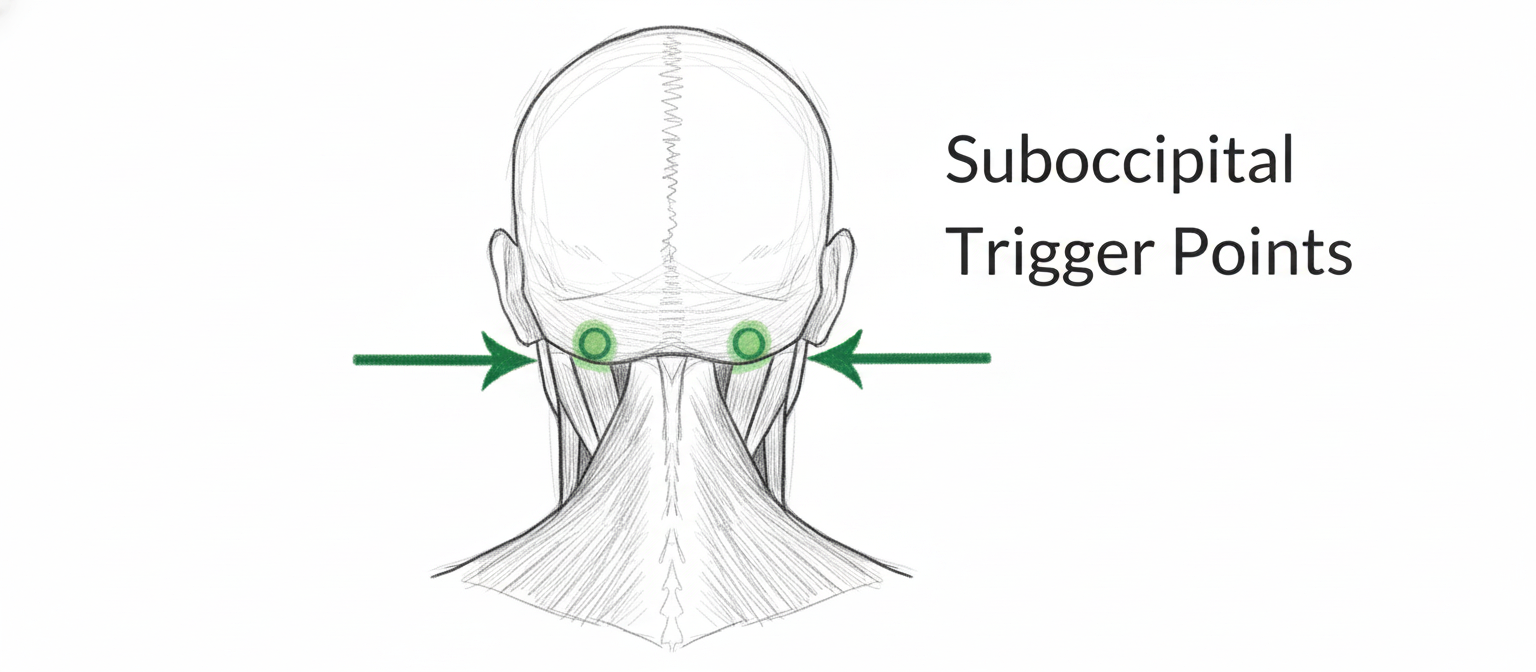
- Suboccipital Muscles: Tiny muscles at the base of the skull that strain intensely from holding your head up, causing the common tension headaches.
2. The Muscles That Get Weak and Inhibited
These are the stabilizing muscles that are supposed to hold your head and shoulders in a neutral position. Because they are rarely used in a slouched posture, they weaken and 'switch off,' making correction difficult.
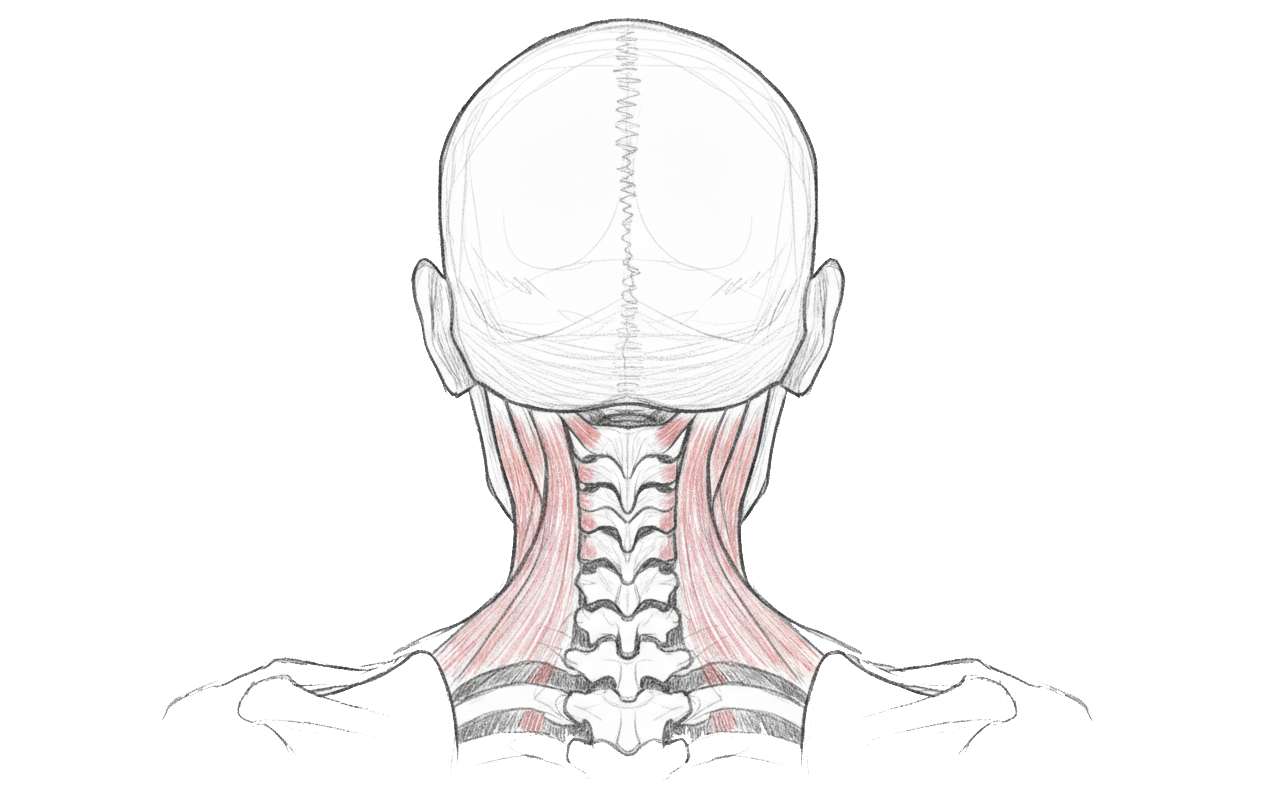
-
Deep Cervical Flexors: These small, vital muscles deep in the front of your neck stabilize the cervical spine. Studies show that a smaller cranio-vertebral (CV) angle (a measure of FHP) is significantly correlated with poor deep cervical flexors muscle performance.(1)
-
Rhomboids and Middle/Lower Trapezius: Located between your shoulder blades, these are essential shoulder stabilizers responsible for scapular retraction (pulling shoulders back). Weakness here forces the upper traps to compensate.
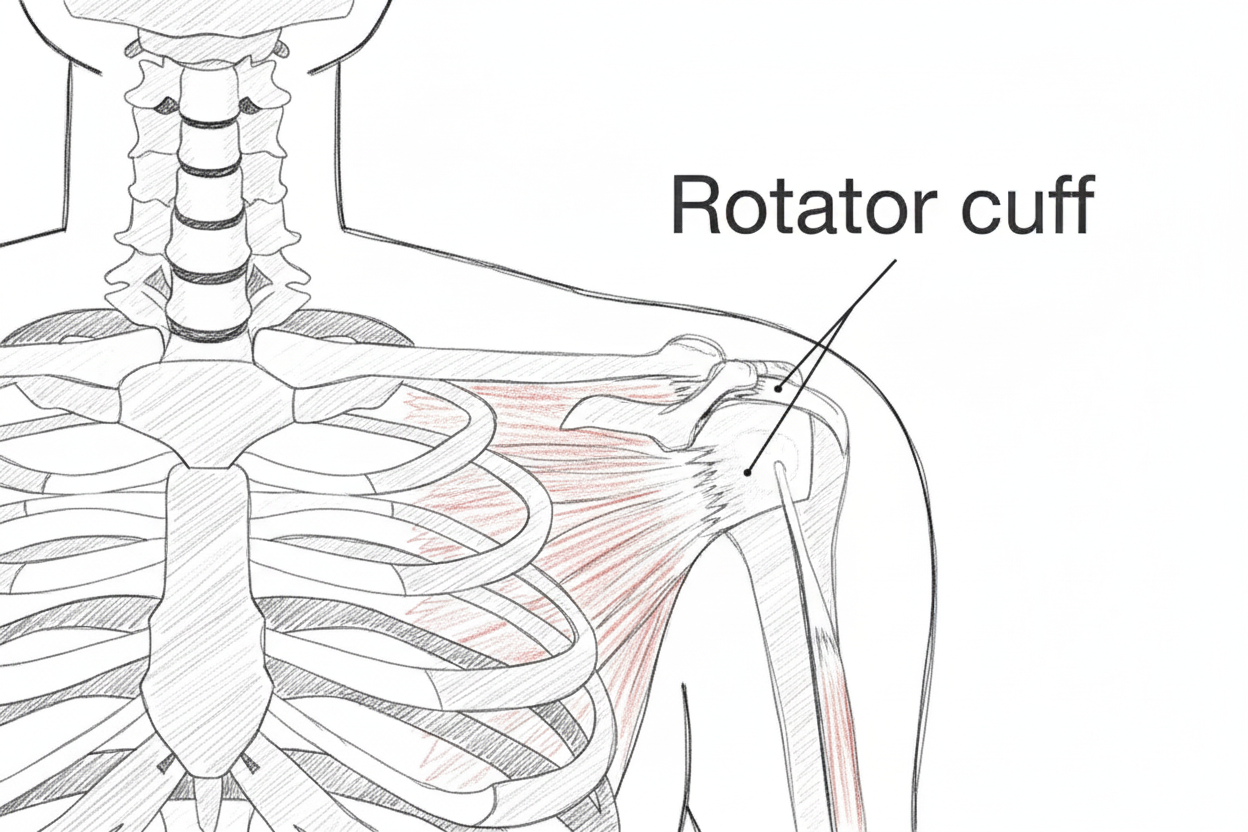
- Rotator Cuff: Essential for supporting and stabilizing the shoulder joint. As Aaron found, weakness here forces the neck muscles to take up the load.
The Integrated Fix: Science-Backed Solutions
The solution is active recovery and integrated ergonomics. We must release the tight muscles and, more importantly, strengthen the weak ones to restore balance.
The Biomechanical Reset: Stretch & Strengthen
1. Stretch the Muscles to Release Tightness
You must release the shortened muscles, especially the chest, to allow the back muscles to engage fully.
-
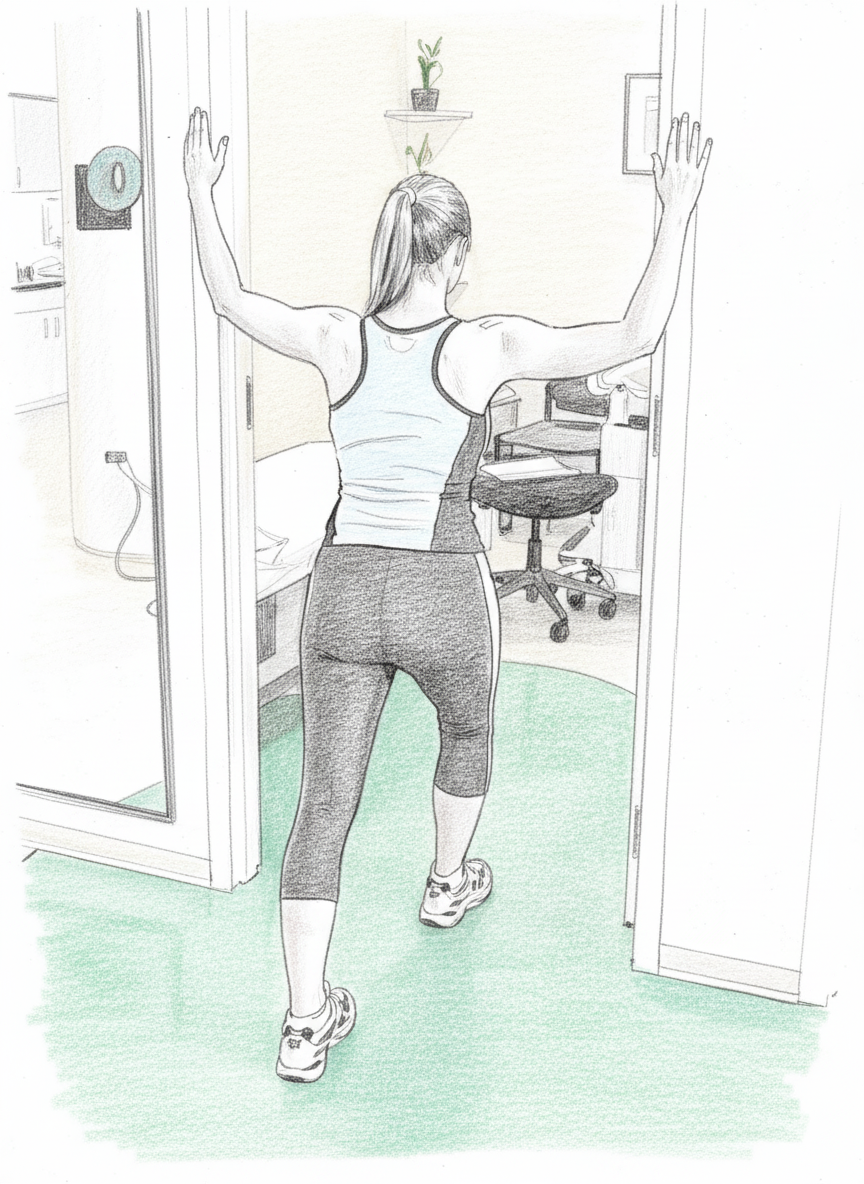
Doorway Stretches (For Pectoralis Minor): Stand in a doorway, place your forearms on the frame (elbows at 90 degrees), and gently lean forward to stretch the tight Pectoralis Minor. Hold for 30 seconds. This opens the chest and immediately relieves the forward pull on your neck.
-
Variation is King: Use a timer to force yourself to take a microbreak (60-second shoulder rolls or neck turns) every 30 minutes. Changing positions is more important than finding one perfect setup.
2. Strengthen the Weak Muscles
Your weak muscles need direct attention to fix Forward Head Posture and stabilize your shoulder.
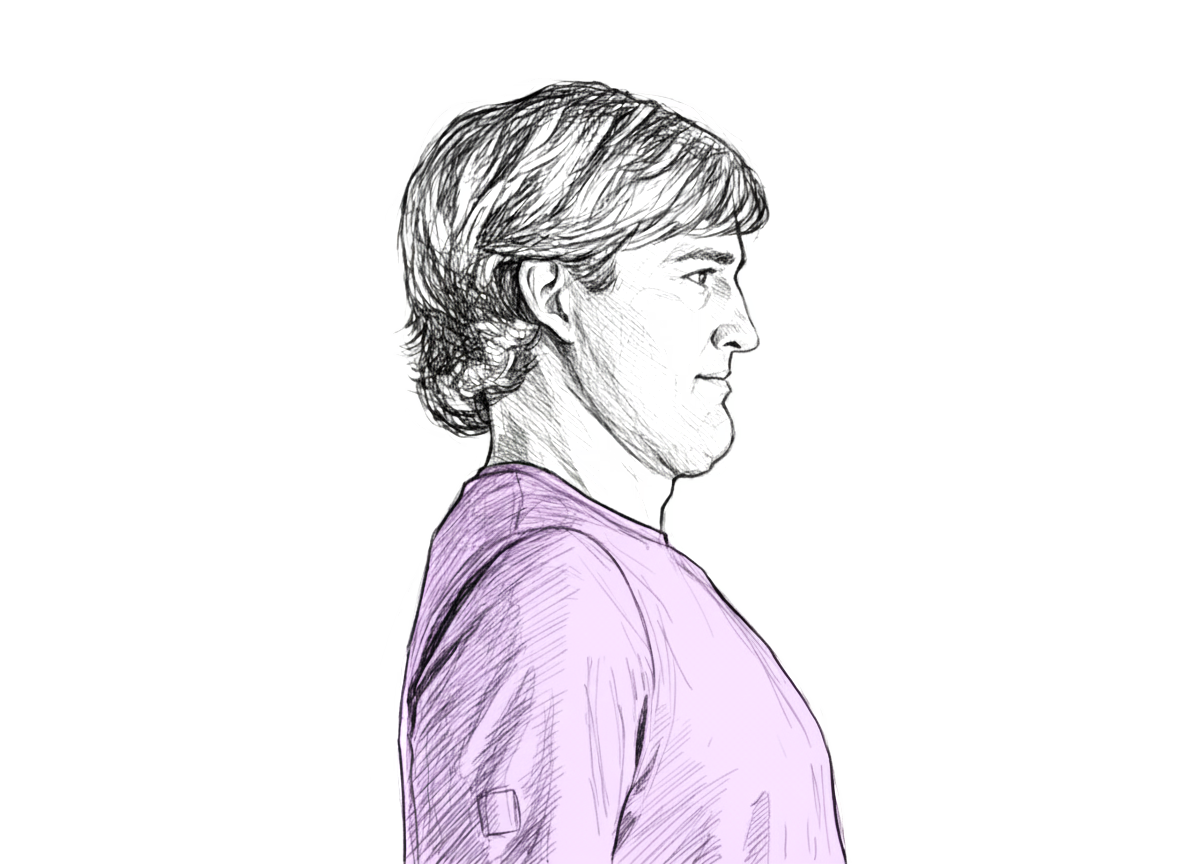
- Chin Tucks (For Deep Cervical Flexors): This is the single most effective exercise for strengthening the Deep Cervical Flexors. Regularly practicing DCF training has been shown to be an effective intervention, decreasing neck pain and resulting disability.(1)(2) 1. Action: Gently pull your head straight backward (not tilting down), as if making a double chin. Hold for 5–10 seconds, 10-15 reps, several times a day.
-
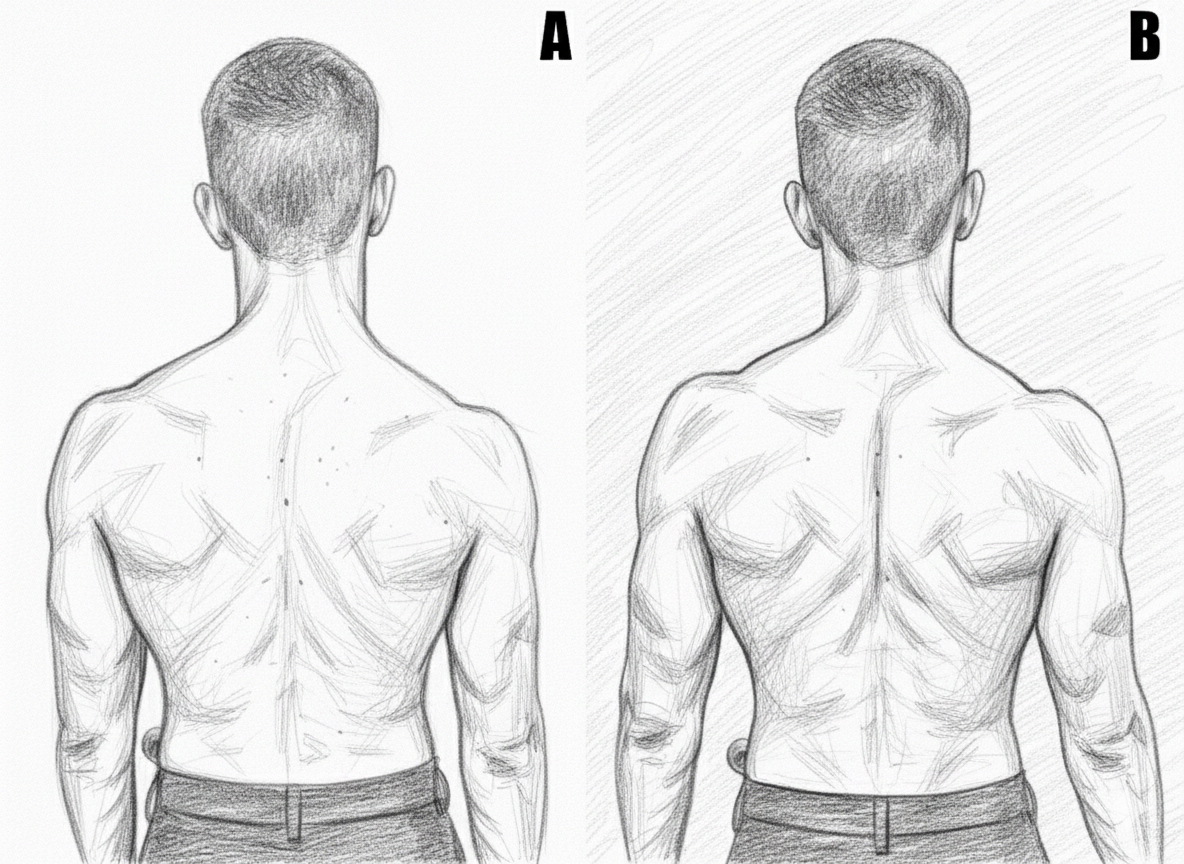
Scapular Retractions (For Rhomboids/Traps): To wake up the Rhomboids and Middle/Lower Traps, sit tall and imagine pinching a pencil between your shoulder blades, pulling them down and back. Perform 10 reps every time you stand up.
-
Rotator Cuff Strengthening: Use a light resistance band for internal and external rotation exercises to strengthen the Rotator Cuff and ensure shoulder stability.
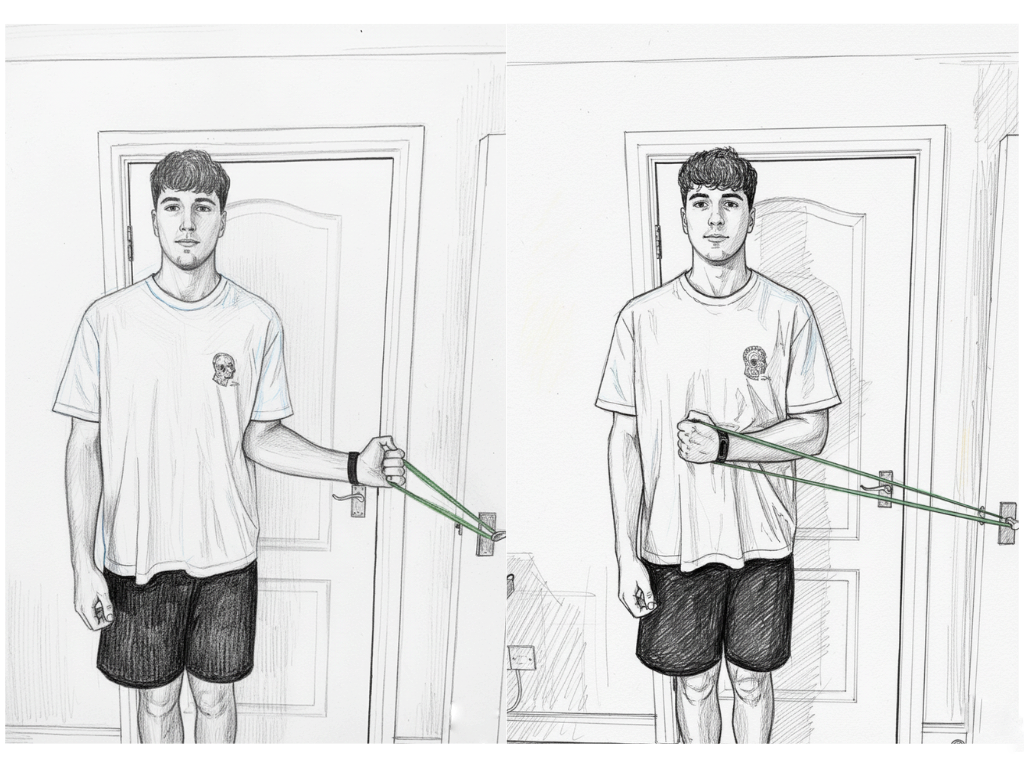
3a. Shoulder Internal Rotation (Targets Subscapularis)
-
Anchor the band to the door. Bend your elbow 90 degrees.
-
Slowly pull your hand inward across your body toward your navel.
-
Hold for 2 seconds, then slowly resist the band back to the start. Complete 10 to 15 reps.
P.S. Make sure you use a door that no one will open while you are performing the exercise!
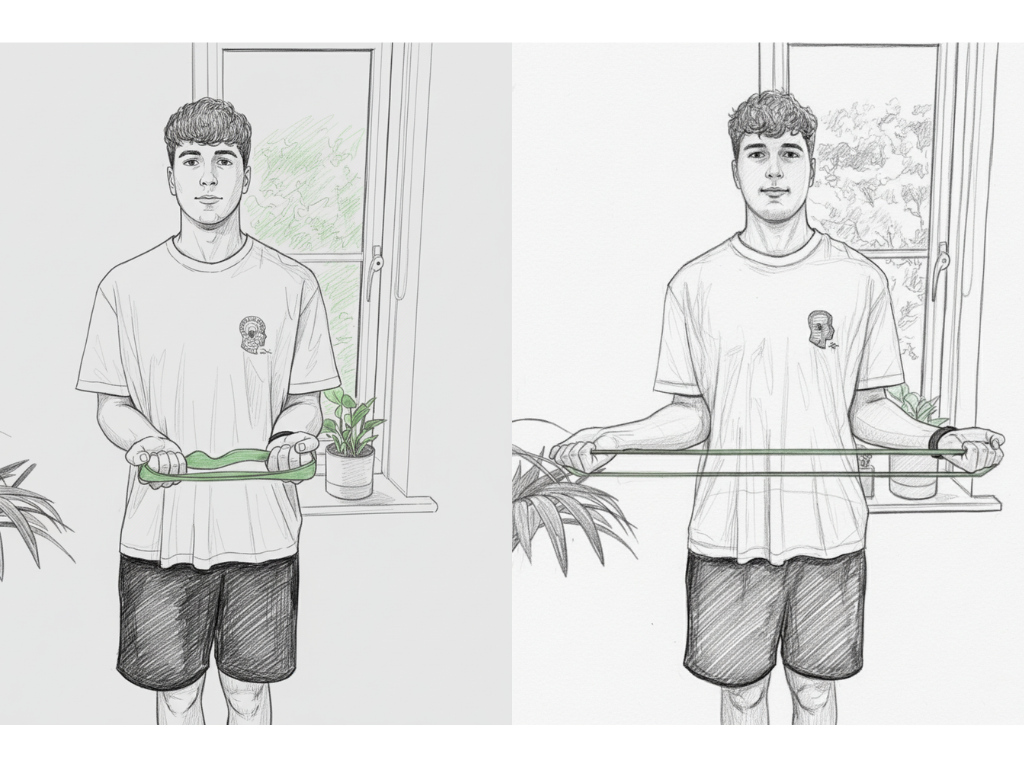
3b. Shoulder External Rotation (Targets Infraspinatus/Teres Minor)
-
Hold the band in both hands. Bend your elbow 90 degrees.
-
Slowly rotate your shoulder outwards, pulling the band away from your navel.
-
Hold the end position for 2 seconds, then slowly return. Complete 10 to 15 reps.
The Ergonomic Fix: Adjust Your Setup
Your setup must force you into a neutral spine and eye position. Research suggests that keeping the screen height appropriately adjusted helps prevent work-related neck pain.(3)(4)
-
Monitor Height: Use a laptop stand or adjustable monitor arm (or an external monitor). Position your screen so the top third is at or slightly below eye level.
-
Armrests and Shoulders: Adjust your chair's armrests so your elbows rest at a 90-degree angle and your shoulders can drop completely. If your shoulders are hiked, that tension goes straight to your Upper Traps.
-
Optimize Visual Comfort: Eye strain often causes us to lean in. Ensure the screen brightness matches the ambient room light to minimize eye fatigue. Here’s how to fix it.
Most people save stretching for the gym, but for desk workers, consistency beats intensity. The simple act of frequent movement is an effective means to reduce neck pain. The most effective approach is incorporating micro-breaks. Experts suggest that even a short break of 30 seconds once every 20 to 40 minutes can be highly effective in reducing work-related neck pain (WRNP) and doesn't negatively impact your productivity.(5) Use those 20 seconds, or slightly longer, to perform one or two of the exercises above.
However, if your pain is severe consult a Physiotherapist. They can provide targeted deep tissue release and ensure your strengthening plan is safe and effective for your specific body and injury.
Conclusion: Reclaim Your Working Hours
The prevalence of neck pain among those with prolonged computer usage is extremely high. Whether you are a student pulling all-nighters or a young professional glued to your monitor, ignoring the link between your visual needs and your physical posture is guaranteed to lead to discomfort and potentially reduced productivity.
By understanding the science of muscular imbalance and prioritizing active recovery over rest, you stop compensating with your spine. It won't happen overnight, but consistent attention to both your visual and physical needs will reduce that feeling of being crumpled. It’s time to start working smarter, not harder, for a healthier future.
**References **
(1): Subbarayalu, A. V., & Ameer, M. A. (2017). Relationships among head posture, pain intensity, disability and deep cervical flexor muscle performance in subjects with postural neck pain. Journal of Taibah University Medical Sciences, 12(6), 541–547.
(3): Yadegaripour, M., Hadadnezhad, M., Abbasi, A., & Eftekhari, F. (2020). The effect of adjusting screen height and keyboard placement on neck and back discomfort, posture, and muscle activities during laptop work. International Journal of Human-Computer Interaction, 37(5), 459–469.
(4): Van Vledder, N., & Louw, Q. (2015). The effect of a workstation chair and computer screen height adjustment on neck and upper back musculoskeletal pain and sitting comfort in office workers. South African Journal of Physiotherapy, 71(1), 279.
(5): Green, B. N. (2008). A literature review of neck pain associated with computer use: Public health implications. Journal of the Canadian Chiropractic Association, 52(3), 161–167.
(2): Fouda, K. Z., & Abdelsalam, M. S. (2022). Effect of cervical exercises with corrective instructions on neck pain and disability in smartphone addicted users. Physiotherapy Quarterly, 30(1), 1–6.