
How Fixing Your Tech Neck Boosts Your Cognitive Endurance
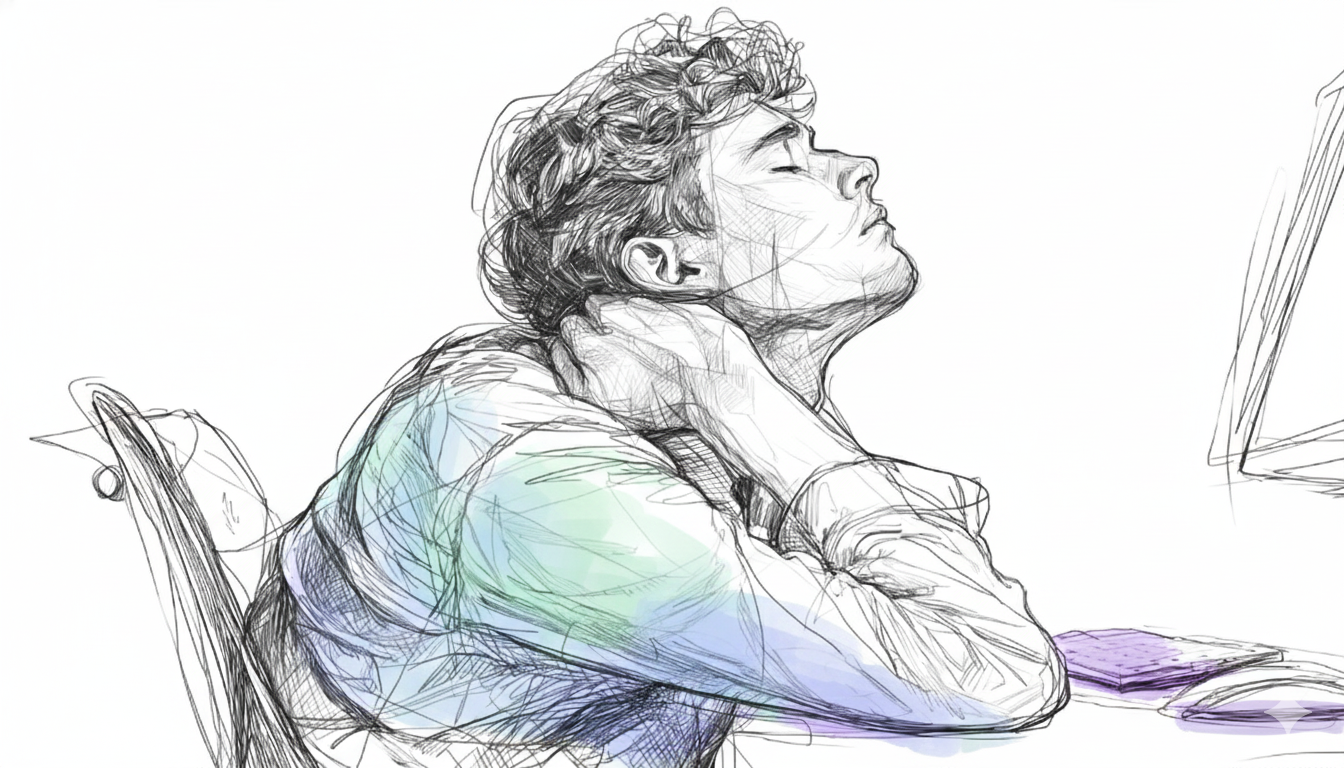
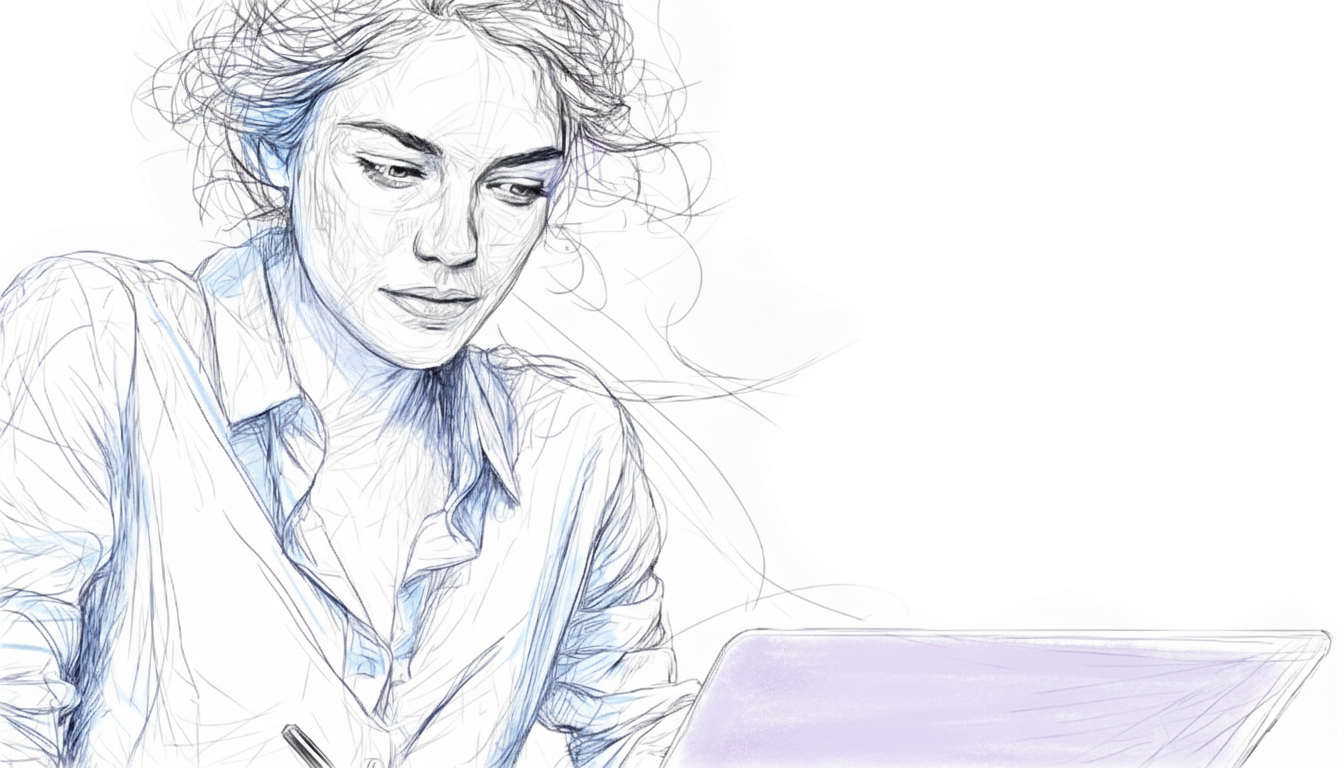
Meet Adriana – a Financial Analyst. Her job is big because the decisions she makes guide millions of dollars. She’s the person everyone relies on.
But every afternoon, a pounding ache starts right at the back of her head and moves down into her shoulders. It’s not just a stiff neck; it’s a crippling headache that feels like a clamp tightening around her skull. She tries to focus on the spreadsheets, but due to the constant neck pain, her job becomes nearly impossible. By the time she closes her laptop, she’s exhausted.
This daily struggle doesn't just stay at the office. The neck pain has forced her to skip two weekends in a row visiting her elderly parents. She keeps missing simple get-togethers with friends, making excuses because of that persistent ache. She's losing her social life and her family time, one painful evening at a time.
If this sounds like your life, you're likely dealing with Tech Neck. It's a common problem caused by looking down or hunching over a screen for hours. This bad posture causes more than just physical pain, because it quietly steals your most important work tool: your ability to focus and think clearly over a long workday.
How Posture Puts Pressure on Your Neck
Where does this draining pain come from? It starts with gravity and physics.
Your head weighs about 10 to 12 pounds, like a medium bowling ball. When you sit up straight, your spine holds that weight easily.(1)
But when you lean your head forward in the classic "Tech Neck" position, the pressure is multiplied. If you tilt your head forward by just 15 degrees to look at your screen, the force on your neck muscles jumps to about 27 pounds. If you look straight down at 60 degrees (like checking your phone), the load can hit a whopping 60 pounds.(2)
This huge load strains your muscles and discs every minute you're at the screen [9]. Fixing your setup isn't about being perfectly comfortable. It's about removing this physical stress so your brain can work right. Ignoring the early stiffness can lead to bigger problems later, like disc damage and lasting inflammation.(3)
The Hidden Cost: Why Neck Pain Makes Your Brain Tired
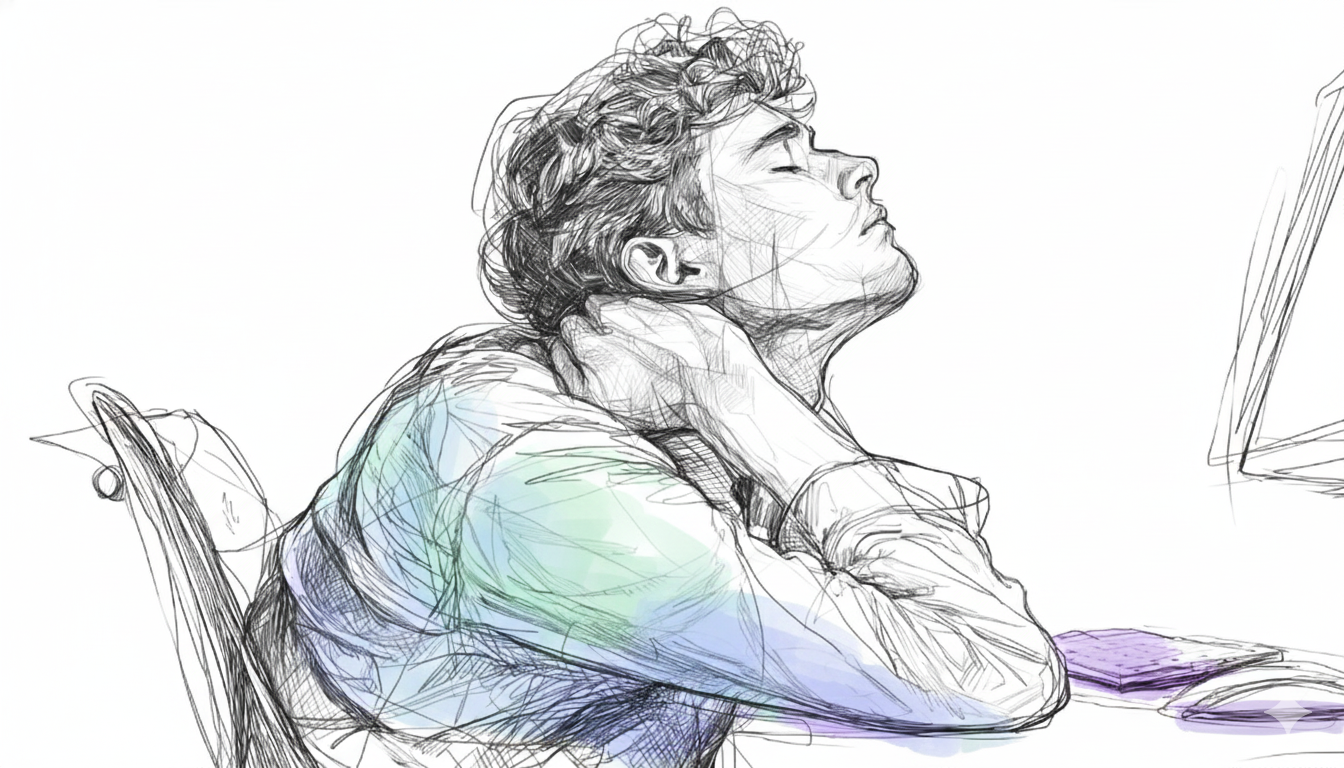
When your neck hurts, your brain has to work harder. Think of it this way:
Imagine your brain is a phone battery. When you open a few necessary apps, the battery is fine. But when you have chronic pain, it's like a heavy app is running in the background all the time. This "pain app" constantly sends distress signals to your brain, and your brain has to spend energy just to deal with the noise.
This continuous drain means your brain has less power left for the hard stuff like solving a tough problem, planning your day, or being creative. This is why you feel mentally exhausted because your cognitive battery is simply running down faster thanks to the constant background activity.
It's Affecting Millions and Costing Us All
Neck pain is a productivity killer. This issue isn't rare; it's a worldwide problem draining the energy and focus of millions of office workers.
Across the world, up to 43.3% of desk workers report having Work-Related Neck Pain (WRNP) in a single year.(4) This isn't just an ache but a constant disability. It makes critical daily tasks, like focusing on a screen or reading complex documents, much harder.[6] Doctors use the Neck Disability Index (NDI), a standard "report card for your neck" to score exactly how much pain limits daily tasks like reading and concentrating.(5)
Studies show that neck pain and stiff shoulders are among the top health issues causing a costly low performance at work.[7][8] In fact, one study found that this physical drag is so powerful that productivity dropped in 36% of cases involving computer workers with neck or shoulder symptoms.(1) This struggle translates directly to dollars lost, with one study reporting the total annual cost of lost productivity (absenteeism and presenteeism combined) for back and neck pain per employee at $1,727 per year in the USA.[12]
Your Quick Guide to Reclaiming Focus and Energy
Getting rid of this mental drain is simple. It just takes small, regular changes to your setup and routine.
Part 1: Fix Your Desk in 5 Minutes
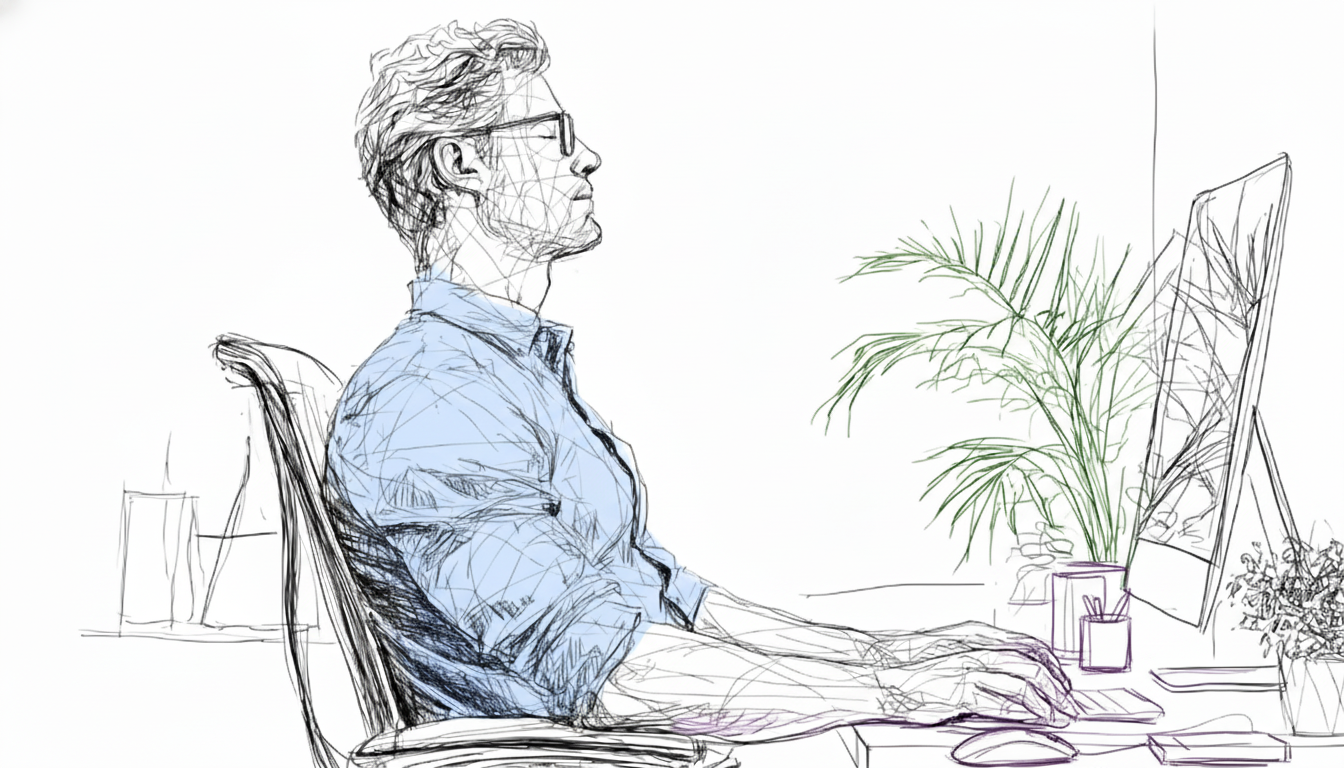
Change your workspace to make good posture easy:
-
Screen at Eye Level: The absolute best thing you can do is raise your monitor or laptop until the top of the screen is level with your eyes. Use a stand or even a stack of sturdy books.
-
The Right Angles: Sit with your feet flat on the floor. Adjust your chair so your elbows are bent about 90 degrees when you type.
-
Back Support: Always sit all the way back in your chair, letting it support your lower back. If your chair is bad, use a small pillow or rolled-up towel. Try using a standing desk or a kneeling chair for part of your day to move around more.
For full insights, read our blog on Ergonomic Hacks for a Happy Body and Healthy Eyes
Part 2: Quick Stretches (The 2-Minute Toolkit)
Pain often comes from staying still too long. Do these simple stretches a few times a day to feel better. Studies show targeted exercises really help reduce neck pain.[10]
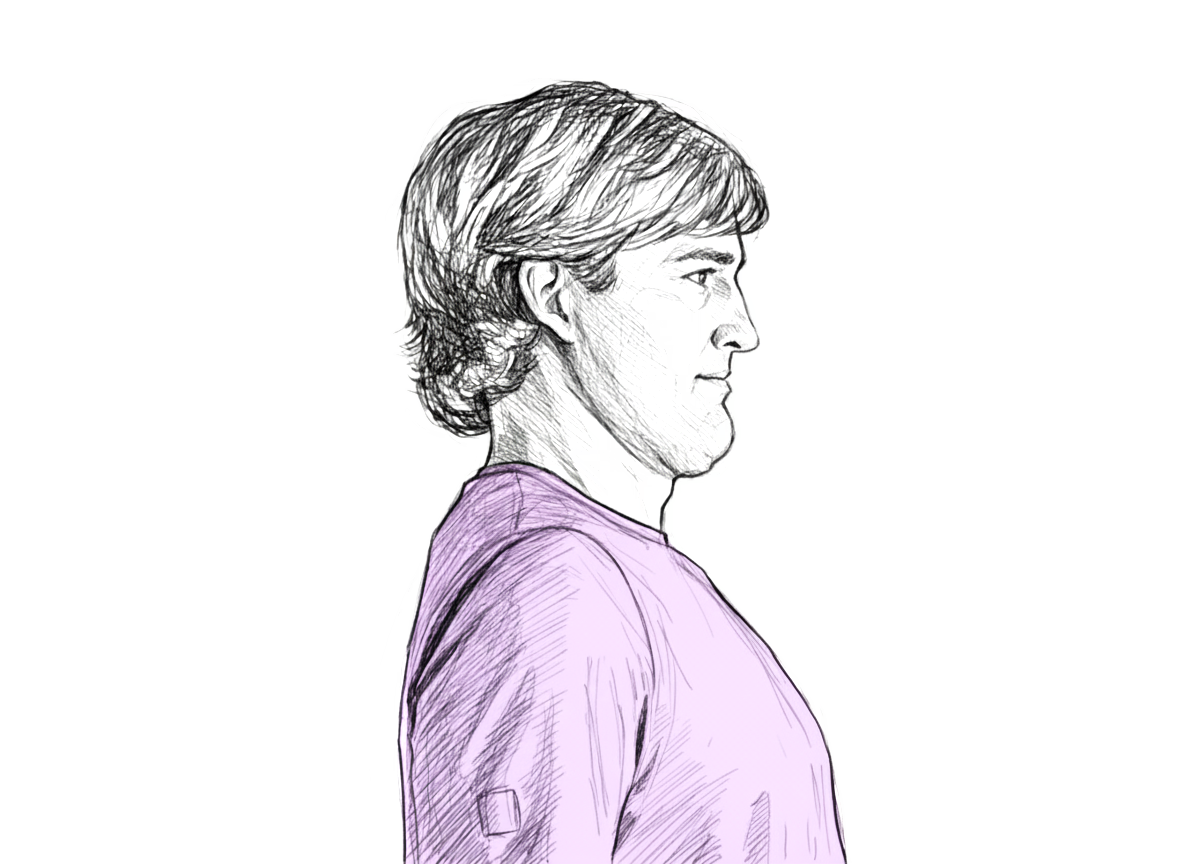
Chin Tucks (The Best Fix): Sit or stand tall. Gently pull your head and chin backward, as if you’re trying to make a double chin. You should feel a stretch in the back of your neck. Hold for 5 seconds. Repeat 10 times.

Upper Trap Stretch: Sit tall. Gently lean your right ear toward your right shoulder. Hold for 20-30 seconds, feeling the stretch on the left side of your neck. Repeat on the other side.

**Hands Over Head Stretch: **Interlace your fingers and stretch your arms straight overhead, reaching high to elongate your spine. Hold for 15 seconds. Do this after every long meeting.
**The Happy Ending: Reclaim Your Life **
In today’s digital era, taking care of your neck is a powerful choice for a better work life and a happier personal life. By stopping the physical strain of Tech Neck, you are turning off that battery-draining app for good.
Think of it this way: If you gain just one hour of focus every day instead of fighting pain, that’s 5 extra hours of productive time each week.
This time and energy is not just for work. It means:
-
More Fun, Less Excuses. You finish your big project faster, giving you the energy to say yes to a spontaneous dinner with friends after work, instead of making a tired excuse.
-
Time for Family. You get home with enough mental clarity to truly play with your kid or enjoy a calm, happy visit with your elderly parents, instead of being too exhausted to talk.
-
Peace. You replace the daily stress of pain with the satisfaction of a body that feels good and a mind that’s sharp and ready.

Start these small changes today. You deserve to work better and live better.
References & Further Reading
(4): Work-related Neck Pain Among Desk Job Workers of Tertiary Care Hospital in New Delhi, India: Burden and Determinants. (2016).* Indian Journal of Community Medicine. *Link
(1): Gohil, D., Kathed, R. S., & Palekar, T. J. (2024). Cracking the Code of Digital Discomfort Through the Dynamic Fusion of Matrix Rhythm Therapy and Physiotherapy Exercises for Text Neck Syndrome. Cureus, 16(4), e58085. Link
(2): Hauser, R. A., Matias, D., & Rawlings, B. (2024). The ligamentous cervical instability etiology of human disease from the forward head-facedown lifestyle: emphasis on obstruction of fluid flow into and out of the brain. Frontiers in Neurology, 15, 1430390. Link
(3): Alanay, A. et al. (2008). Kinematic analysis of the relationship between the grade of disc degeneration and motion unit of the cervical spine. Spine (Philadelphia, Pa. 1976), 33(2), 187–193. Link
(5): The Neck Disability Index: A Study of Reliability and Validity. (1991). Journal of Orthopaedic & Sports Physical Therapy. Link