
Six Simple Exercises to Release Workplace Stress
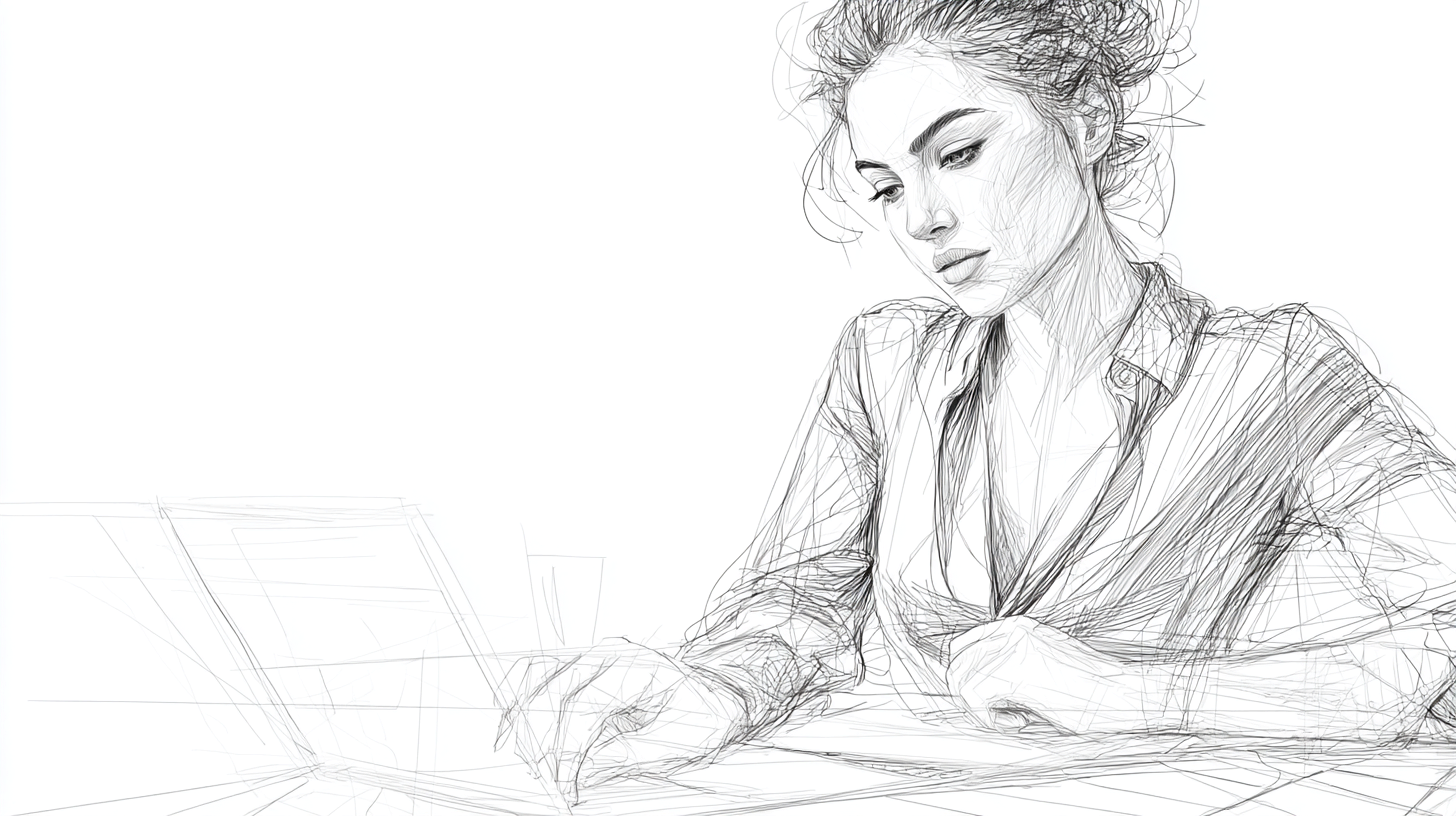
Meet Janice. She’s a Senior Analyst, highly organized, and by all appearances, very well composed. Her boss and team members rely on her for big decisions and she is usually spot on with her project deadlines.
Recently, a big project was handed to her. She has been working longer than usual to make sure it meets the client's expectations. She starts her morning on a normal note, but by the afternoon, her shoulders are pinned to her ears, she feels a tension in her neck and shoulders, and her hands feel icy cold. Even though she’s been staring at the same spreadsheet cell for fifteen minutes, she is not able to focus. The subtle brain fog makes every task take twice as long.
In the modern workplace, we often treat the mind and body as separate entities. We assume that mental stress stays in our heads. However, your biology doesn't know the difference between a looming deadline and a predator in the wild. When your mind feels under pressure, your body prepares for a physical fight and your ability to deliver results at work fades.
Why You Feel Exhausted While Sitting Still
When Janice’s brain registers a high-stakes email or she walks out of a confrontational meeting, it triggers a survival mechanism called Guarding. This is an unconscious tensing of muscles to protect the body from a perceived attack.
Even though she is just sitting, her body is burning through energy as if she’s running to save her life, and that mental stress expresses itself physically:
-
The Brow Furrow: Stress causes us to become hyper-focused. We knit our brows and strain the muscles around our eyes. While this improves our focus in the short term, persistent hours in that zone wears out the body and leads to screen headaches.
-
The Shoulder Shield: We instinctively pull our shoulders up toward the ears to protect the neck and chest. It’s like wearing a heavy suit of armor all day, which consumes massive amounts of oxygen and glucose, and leaves you drained by mid-afternoon.
-
Shallow Breathing: Our breathing rate speeds up to push more oxygen to the brain. The abdominal area (midsection) tightens, preventing our ability to take deep breaths. This keeps the body trapped in a cycle of anxiety.
-
Cold Hands: To prepare for fight or flight, the brain pulls blood away from the fingers and toes, sending it to the heart and lungs. If your hands are cold in a warm office, your body is likely in survival mode.
How Stress Affects Your Brain
To understand why Janice can't think clearly, we have to look at the brain’s internal radar, called Interoception.(1) This is the system your brain uses to listen to your internal organs and muscles.
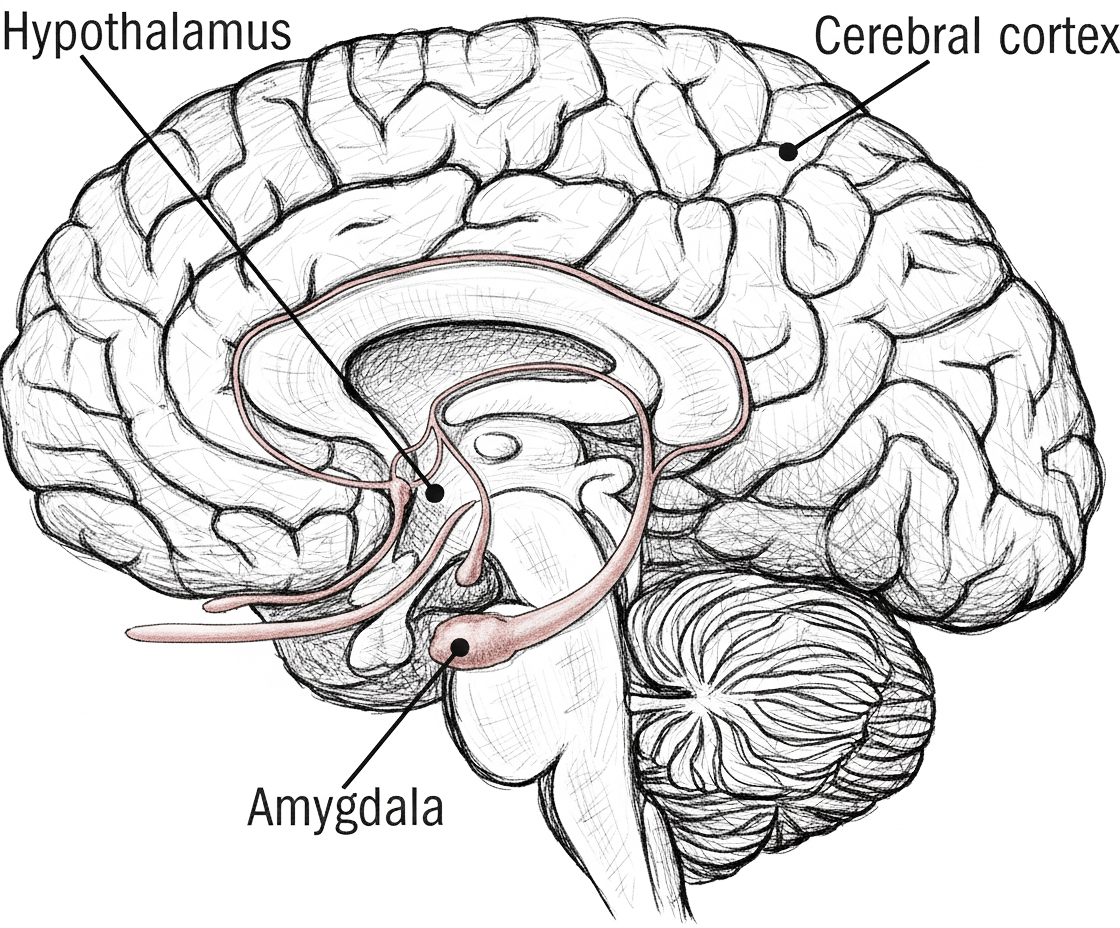
When you are stressed, your amygdala (the part of the brain that cares about survival) receives a signal that you are in a hostile environment. To save energy for this perceived survival situation, the brain reduces power to the prefrontal cortex (the logic center).(2)
The result - this leads to cognitive erosion (brain fog). You read the same sentence three times because the thinking part of your brain is literally starved of the fuel it needs. Your brain has simply shifted its resources to survival mode and is unable to spend resources on cognitive tasks, crashing your productivity at work.
A body in fight or flight mode interprets the world through a lens of hostility. Research shows that high levels of cortisol and noradrenaline (stress hormones) can cause the brain to misinterpret neutral facial expressions as threatening.(3) Because your nervous system is agitated, even a neutral comment from a colleague can feel like a personal attack. This deteriorates workplace relationships, further impacting your ability to get things done.
This mental stress even causes physical wear and tear in your body. Over time, it leads to tension headaches, stiff muscles in the neck and back, stiff jaw leading to TMJ (Temporomandibular Joint) disorders, and suppressed immune function that leaves you prone to burnout. Your body ends up depleted because it has spent the entire day burning survival energy while you were simply trying to work.(4)(5)
Six Simple Exercises to Release Stress
Research shows that micro-breaks under ten minutes can help reset your nervous system.(6) You can do these right at your desk to tell your brain the threat has passed.
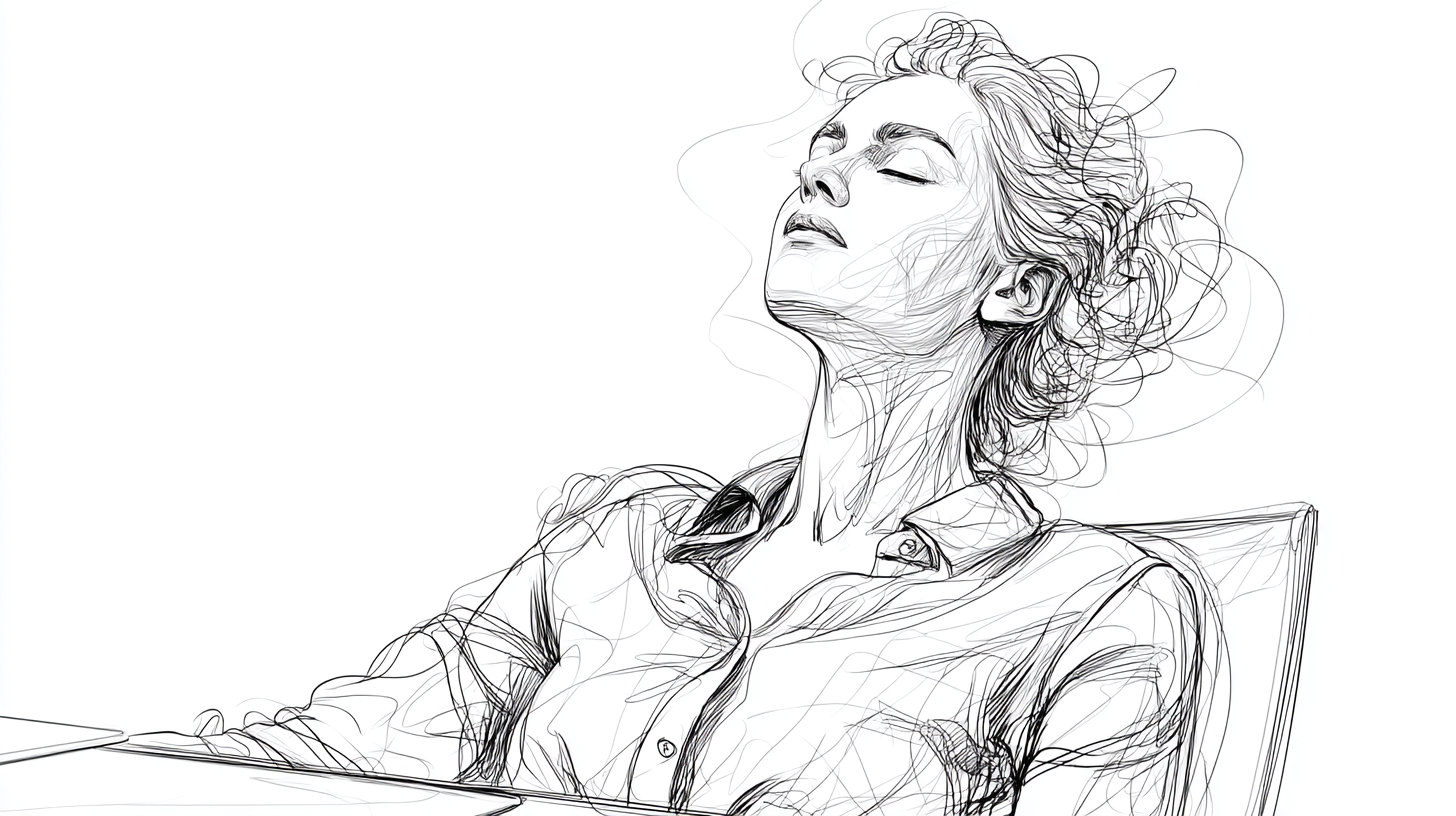
**1. The Physiological Sigh: **Inhale deeply through your nose, then take a second, shorter sip of air at the very top. Exhale very slowly through your mouth as if you’re breathing through a straw. Perform 2 to 3 breath cycles back-to-back for 15-20 seconds, whenever you feel stressed.
This re-expands the air sacs (alveoli) in your lungs, triggering a rapid release of carbon dioxide and stimulating the vagal nerve to calm your heart rate.
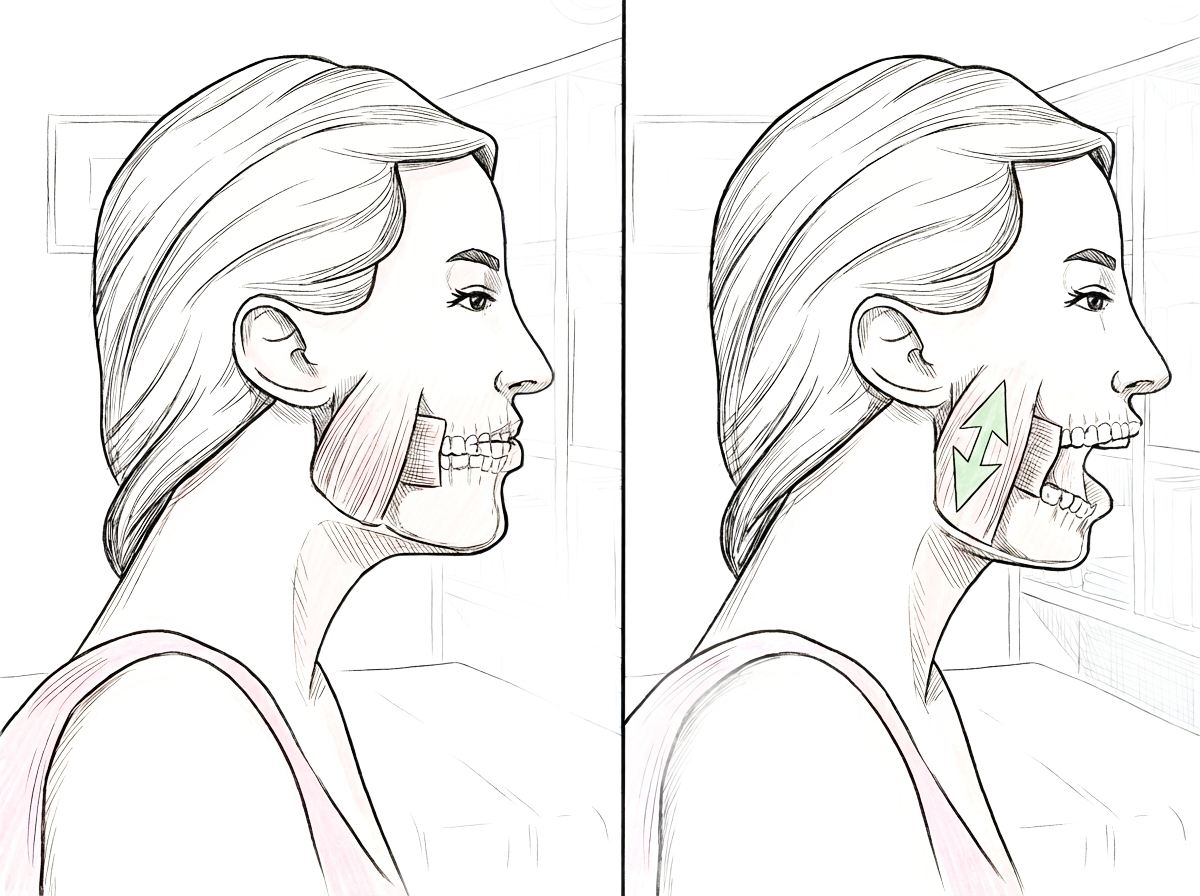
**2. The 30-Second Jaw Reset: **Place the tip of your tongue behind your top front teeth. Let your teeth part and allow your jaw to hang heavy. Do it once every hour or whenever you notice you are concentrating hard on a task.
The masseter (jaw) muscles are key markers of the stress response. Releasing them tells the brain that the threat has passed.
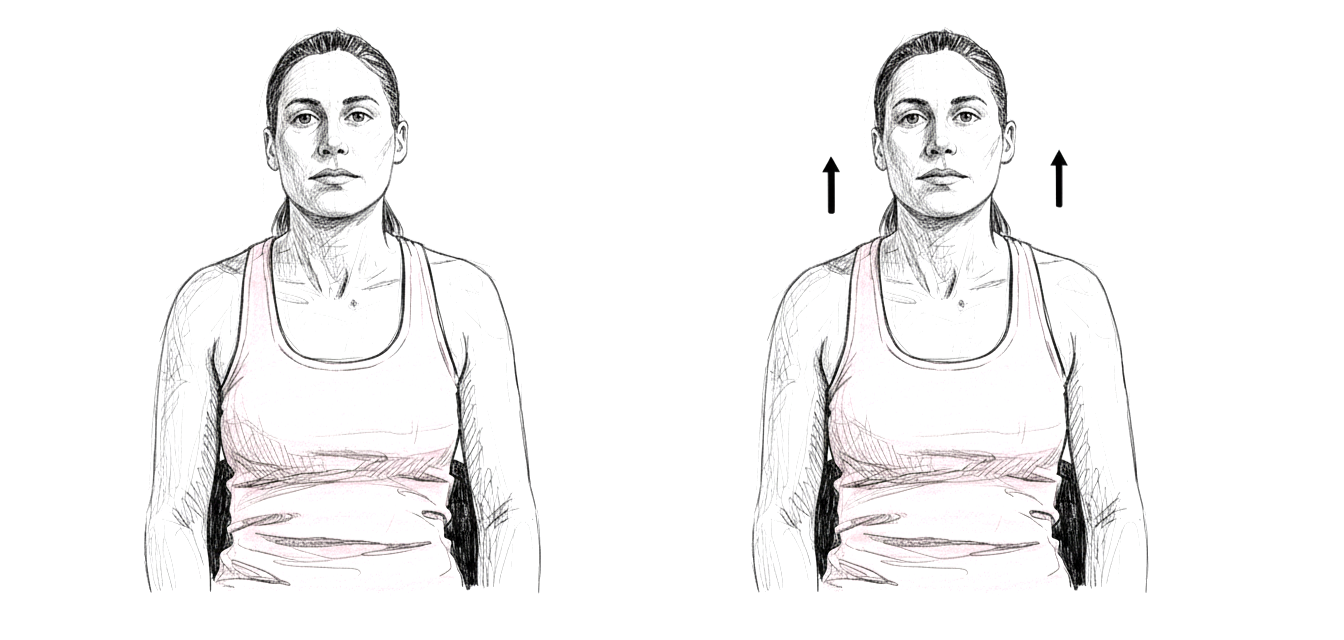
**3. The Shoulder Drop (De-Bracing): **Inhale and shrug your shoulders all the way to your ears. Hold for 3 seconds, then exhale forcefully and let them drop. Repeat 3 times.
This allows for a return to diaphragmatic breathing, which research associates with improved cognitive performance and lower cortisol levels.
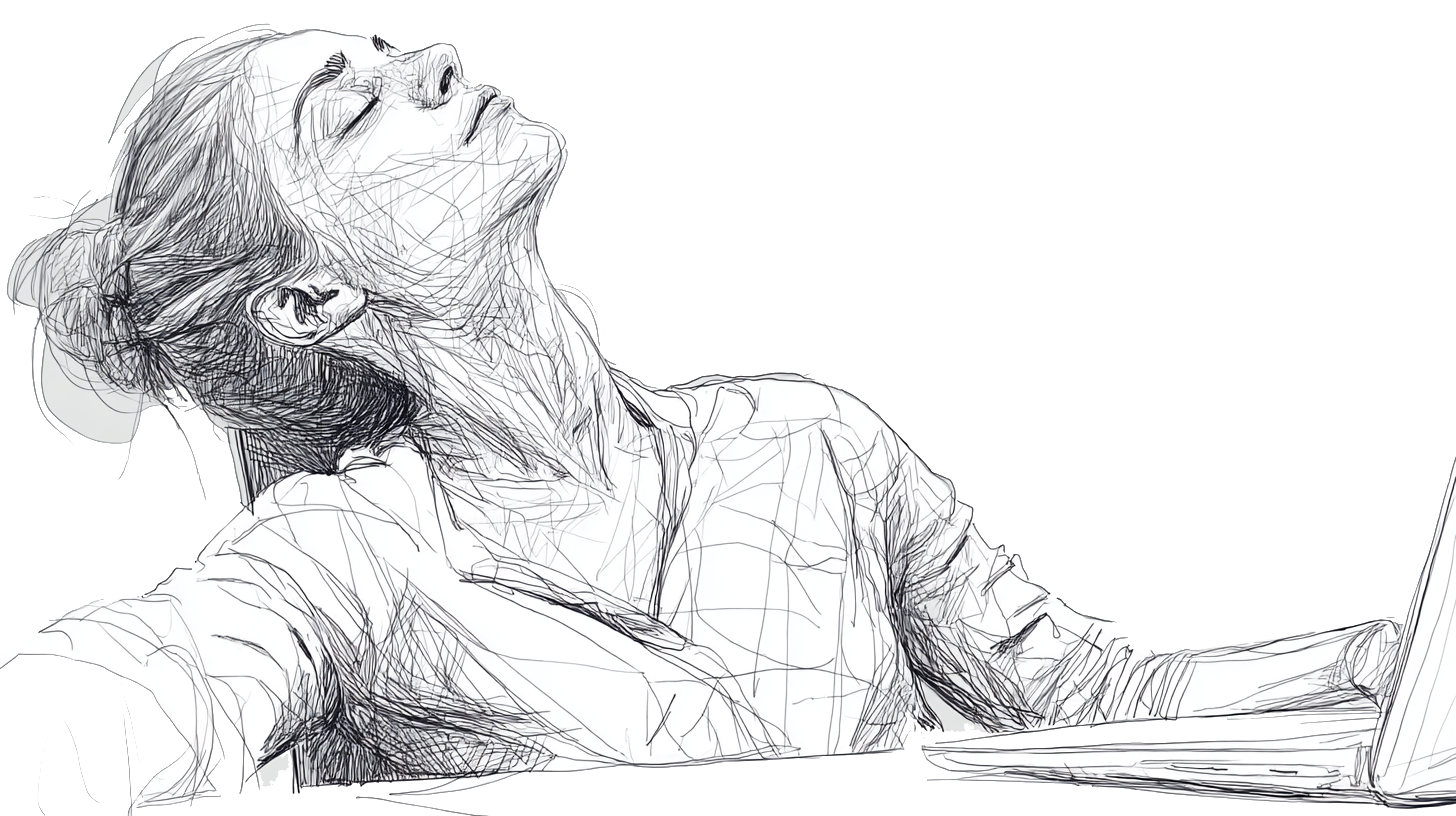
**4. The Gentle Neck Stretch: **Sit up tall and drop your chin slightly toward your chest. Gently tilt your right ear toward your right shoulder until you feel a pull. Hold for 15 seconds, then switch sides.
Stress causes the muscles at the base of the skull to tighten, which can lead to brain fog and tension headaches. Stretching the neck releases the tension and encourages blood flow.
5. The Mindful Sensory Break: Look away from your computer. Identify 3 things you see in the room, 3 sounds you hear in the distance, and 3 objects you can touch (like your desk, your sleeve, or your chair).
Stress causes the brain to focus only on the digital threat (the screen). This grounded awareness pulls your brain out of its internal stress loop.
6. Take a Walk: Disengage from your work for a short break. Get some water or a calming drink, take a short walk, and avoid screens for a while. This break clears your mind and helps you relax.
Conclusion
Your peak performance is only possible when your mental abilities are operating at full capacity. Ignoring symptoms of stress like cold hands, shallow breathing, and tension headache won't help you finish faster. It will only make things worse by forcing your brain to stay in survival mode and reducing your ability to focus.
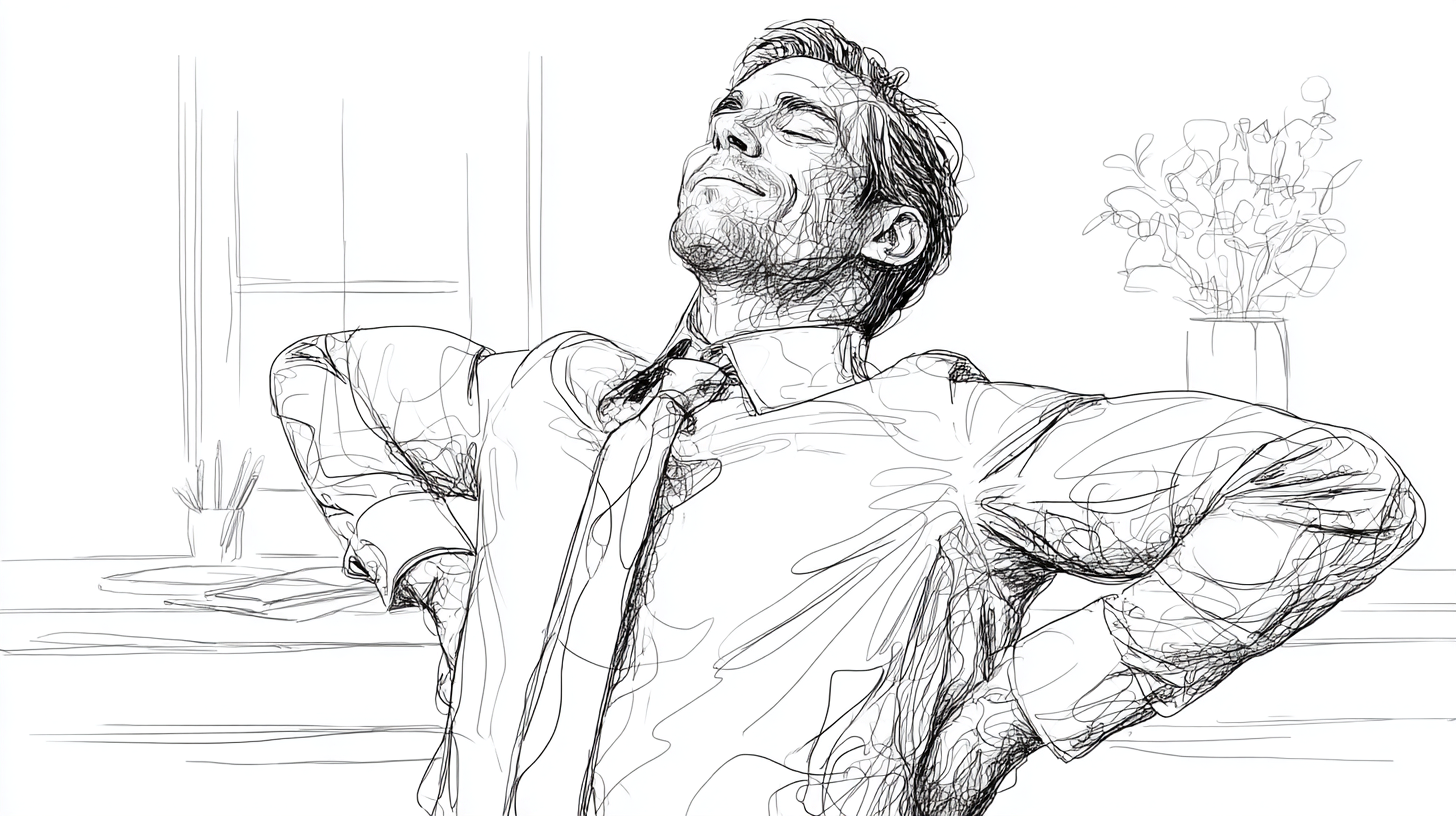
By using these physical resets, you stop the workplace pressure from becoming a permanent physical load. Drop your shoulders, unhinge your jaw, and take a deep breath. The work will still be there, but that short break will give you the clarity to finish it.
References & Further Reading
(1): Craig, A. D. (2002). Interoception: The sense of the physiological condition of the body. Current Opinion in Neurobiology, 13(4), 500-505.
(2): Arnsten, A. F. T. (2009). Stress signalling pathways that impair prefrontal cortex structure and function. Nature Reviews Neuroscience, 10(6), 410–422.
(3): Brown, C. C., Raio, C. M., & Neta, M. (2017). Cortisol responses enhance negative valence perception for ambiguous facial expressions. Scientific Reports, 7, Article 15107.
(4): Ahmad, I. et al (2022). Prevalence of musculoskeletal pain among computer users working from home during the COVID-19 pandemic: A cross-sectional survey. Bulletin of Faculty of Physical Therapy, 27(1), Article 51.
(5): Ishiyama, H. et al (2025). The relationship between work‐related stress and temporomandibular disorders‐related symptoms in Japanese working population. Journal of Oral Rehabilitation, 52 (10), 1583–1590.
(6): Albulescu, P. et al (2022). "Give me a break!" A systematic review and meta-analysis on the efficacy of micro-breaks for increasing well-being and performance. PLoS ONE, 17(8), e0272460.