
Dopamine Detox: Re-Sensitize Your Brain to the Reward of Deep Work
You can crush a major deadline, but you can’t sit still for five minutes without checking your phone. That's because your brain is wired for quick hits, and it's making complex work feel impossible. It’s time to reprogram your reward system.

Meet Max. He’s a founder building an innovative startup from his home office. He has a brilliant roadmap, a growing user base, and a to-do list that could scroll to the moon. He knows exactly what he needs to do: spend the next four hours working on the new core feature of his product which is vital for the company’s future.
But his brain has other plans.
A notification buzzes. A quick glance at his phone turns into a 20-minute scroll through social media. He gets back to his laptop again, determined, only to find himself checking email and social media. The important task is left out and his brain is chasing small, fleeting rewards. By lunch, Max is frustrated because he has made zero progress on the one thing that matters.
This isn't a failure of willpower. It's a sign of a reward system that has been hijacked.
In fact, studies show it can take over 23 minutes to regain focus after a single distraction. (1) Given that the average person checks their phone around 58 times a day, it's a miracle any deep work gets done at all. (2)
In a world of endless digital stimuli, our brains have become accustomed to "cheap dopamine," and it is making the slow-burning satisfaction of deep work feel boring.
**The Role of Dopamine **
Dopamine is one of the most critical neurotransmitters (or chemical messengers) in your brain. (3) Think of it as the ultimate motivation fuel. It's primarily produced deep within the brain in two tiny but powerful headquarters: the Ventral Tegmental Area (VTA) and the substantia nigra. (4)
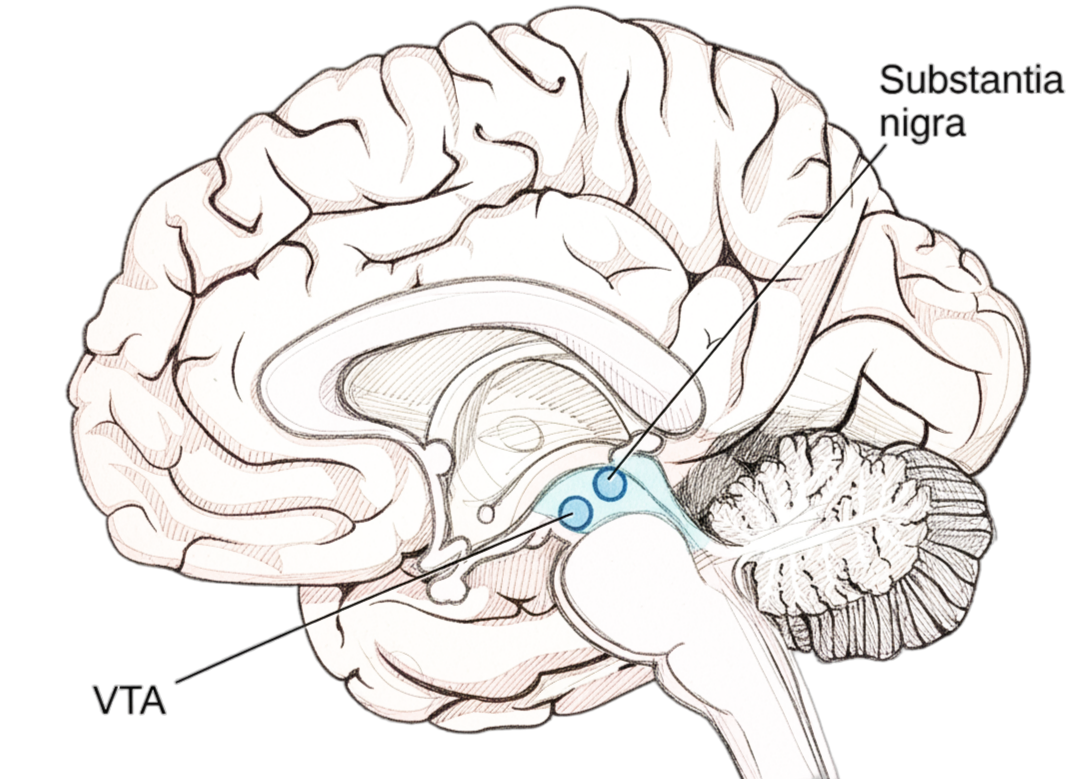
The Ventral Tegmental Area is the heart of your brain's reward system, which tells you to "Go get that thing," while the substantia nigra is crucial for controlling your movement and motor skills. To create dopamine, your brain relies on tyrosine, which is converted into L-DOPA and then into dopamine.(5) Tyrosine is an amino acid that you get from protein-rich foods like cheese, soybeans, meat, fish, chicken, nuts, eggs, dairy, beans, and whole grains.(6) (7)
How Dopamine Works
Dopamine's main job isn't pleasure, it's motivation. It drives seeking behavior by signaling the expectation of a reward, compelling you to take action. (8)
When Dopamine is balanced, it fuels your focus and motivates you to pursue long-term goals (like Max's product feature). Your brain is sensitive to the subtle rewards of everyday life, meaning you can appreciate a quiet walk (a Low-Stimulus Replacement) just as much as you can sustain deep focus. (9) This is why anticipation of success from Delayed-Reward Activities (like finishing a tough project) feels enough to justify the required effort. You can experience joy and pleasure without it interrupting your ability to focus.
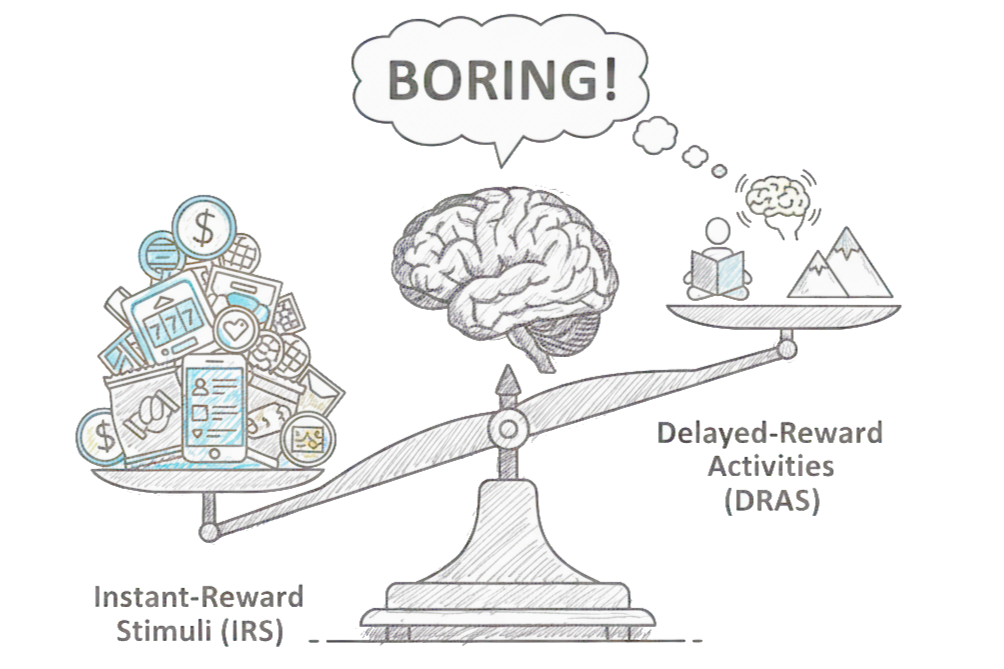
However, the problem lies in the abundance of Instant-Reward Stimuli (IRS). This includes not just social media, but also news alerts, streaming platforms, and highly processed sugary foods, which are perfectly engineered to exploit your reward system.(10) (11) They deliver what's known as a variable reward schedule, just like a slot machine. You never know if the next scroll will deliver a juicy piece of gossip or a 'like.' This constant unpredictability keeps your brain hooked, seeking the next hit. (12)
What happens if you have too much or too little dopamine?
When dopamine levels are too low, you start to lose that inner drive. This often leads to poor motivation and difficulty initiating any action, a state known as apathy. Low dopamine can contribute to conditions like depression or, in severe cases affecting the substantia nigra, Parkinson's disease (which involves a loss of motor control). (13)
Conversely, when your brain is flooded with too much instant dopamine (which is what happens with screen addiction), it creates an imbalance that is equally disruptive. This flood forces your brain to raise its baseline, making the subtle rewards of normal life feel boring. (12) This high stimulation can lead to addictive or impulsive behavior as your brain keeps seeking the next high-stimulus hit, leading to that constant cycle of checking your phone. Therefore, the goal of detox is to restore sensitivity so that the fulfilling dopamine signal from deep work feels satisfying again.
But Why Does Deep Work Feel 'Boring'
When your brain is conditioned to expect instant, high-stimulation rewards, it starts to devalue delayed gratification. The focused effort required for deep work - like a programmer writing code, an executive developing business strategy, a lawyer crafting legal briefs, an accountant analyzing financial data, a teacher grading essays, or a designer making final graphic refinements - offers a slower and deliberate dopamine release.
Think of it like your diet. If you spend all day snacking on sugary candy, a nutritious meal of vegetables and lean protein will taste bland. Your palate is overwhelmed.
Similarly, a brain fed a constant diet of digital junk food struggles to appreciate the satisfaction of solving a problem. This isn’t laziness; it’s a core element of productivity psychology. Your focus is a finite resource, and constant digital interruptions prevent you from entering the deep immersion required for high-quality work.
Introducing Stimulus Budgeting
Trends like "Dopamine Fasting" or “Dopamine Detox” have gained popularity. The goal is to re-sensitize your brain to the rewards of meaningful effort.
A more effective approach is what we can call "Stimulus Budgeting."
Stimulus budgeting means intentionally limiting your exposure to highly stimulating activities in order to restore your brain's sensitivity to natural, delayed rewards. The goal is to break compulsive habits and find satisfaction in simple yet meaningful pursuits.
We can categorize stimuli based on the reward they offer:
-
Instant-Reward Stimuli: These are the highly stimulating tasks that exploit your dopamine system, offering minimal long-term value (e.g., social media scrolling, notifications, binge-watching, junk food). These are what we are budgeting against.
-
Delayed-Reward Activities: These are the high-value tasks that require sustained focus and effort but yield lasting satisfaction (e.g., coding, writing, strategic planning - your Deep Work).
-
Low-Stimulus Replacements: These are routine, calming tasks that allow your brain to rest and recalibrate (e.g., walking without a podcast, journaling, or organizing your desk).
By replacing instant-reward stimuli with low-stimulus replacements, you create space for your brain to rest and recharge. This way you are preserving your energy for the delayed-reward activities that move the needle. When you consciously step away from high-dopamine stimuli, you allow your brain to recalibrate, making focused work feel engaging and satisfying again. (14)
Tactical Hacks
Here are some actionable strategies for implementing Stimulus Budgeting:
-
Identify Your Triggers: Pinpoint the specific activities that provide quick "dopamine hits" and lead to a cycle of seeking more, such as: - Smartphone notifications (pings, pop-ups, social media scrolling) - Constant email checking/instant messaging - Mindless internet browsing (news sites, online shopping, YouTube) - Sugary snacks/junk food in the breakroom
-
Set Clear Limits: Instead of total elimination, set specific time windows or boundaries for high-stimulus activities. For example: - No phone use for the first hour after waking up and 90 minutes before bed. - Checking emails only at 10 am and 4 pm for 30 minutes each time. - Limiting social media to a total of 20 minutes a day.
-
Add Friction: Make it harder to engage in unwanted behaviors. - Delete distracting apps from your phone. - Use website blockers on your computer. - Use apps to track and limit your screen-time. - Keep devices out of sight and reach (in another room).
-
Go for Low-Stimulus Activities: These practices are your secret weapon for recharging and re-sensitizing your brain during breaks. They are easy to implement, regardless of your schedule:

Offline Breaks: Fill the time previously spent on high-dopamine activities with less stimulating alternatives. Examples include:
-
Reading a physical book
-
Walking in nature
-
Meditation, journaling, or drawing
-
Having a deep conversation with a friend.
Deep Work: Block your calendar for focused work (start with just 45 minutes) and execute high-value tasks; for example, a programmer writing code, a lawyer crafting briefs, or a designer making final refinements, without digital interruptions.
- Manage your Routine:
-
Plan your day intentionally: Start your day with a focused, important task (a "closed system" like working on a document or spreadsheet) rather than an "open system" like your email inbox or a news feed.
-
Manage your diet: Reduce sugary and processed foods. Go for a diet rich in tyrosine (found in chicken, avocados, bananas, and almonds) to support healthy dopamine production.
-
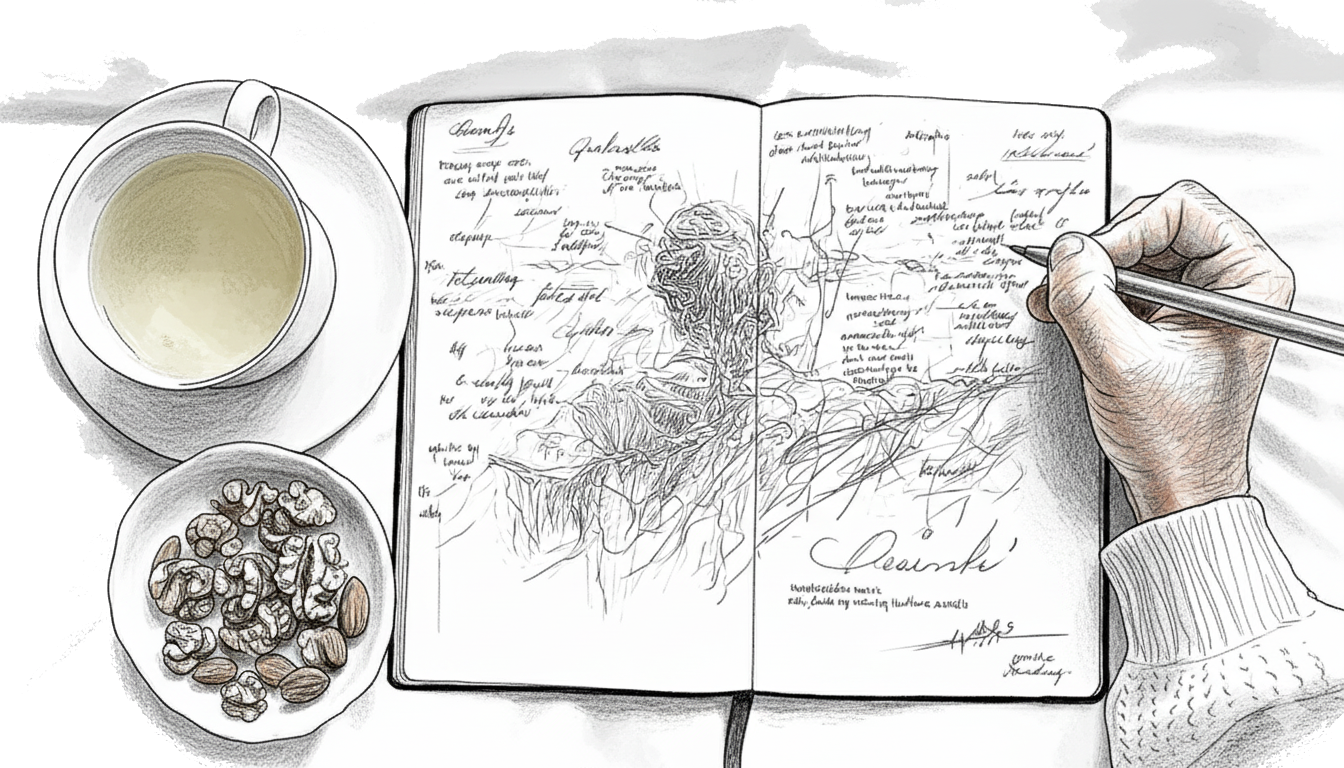
Track and Reflect: Keep a journal of your experience. Note moments of restlessness, cravings, and how you feel after engaging in low-stimulus activities. This self-awareness helps identify patterns and reinforces your progress.
-
Plan for the Future: After your detox period (which can range from a day to a weekend to several weeks), reintroduce stimulating activities in moderation. This will help maintain the new, healthier boundaries you've established.
This way, you reclaim control of your focus, making it easier to pursue long-term goals and find joy in everyday life.
**Instead of (High-Dopamine) **
Try (Low-Stimulation, Productive)
Scrolling social media
Going for a short walk (indoors or outdoors)
Eating a sugary snack
Having a healthy snack or drinking water/green tea
Binge-watching videos at lunch
Reading a physical book or listening to calming music in moderation
Mindless browsing during a pause
Journaling or practicing mindfulness/meditation
Checking phone first thing in the morning
Stretching or planning your top 3-5 tasks for the day
When you need a break or feel the urge for a quick fix, replace the high-dopamine activity with a low-stimulation alternative.
Reclaim Your Focus
In a world that constantly demands attention, the ability to manage our cognitive load is a superpower. By strategically using a dopamine detox, you’re retraining your brain to find satisfaction in creation and problem-solving. You’re making hard work feel rewarding again.
So, start small: identify your top three high-dopamine activities and replace them with less stimulating alternatives to enhance your mental clarity.
**References & Further Reading **
1. Mark, G., Gudith, D., & Klocke, U. (2008). The cost of interrupted work: More speed and stress. In Proceedings of the 2008 Conference on Human Factors in Computing Systems (CHI '08) (pp. 107-110). Florence, Italy: Association for Computing Machinery.
2. Frej, D., Jaśkiewicz, M., Poliak, M., & Zwierzewicz, Z. (2022). Smartphone use in traffic: A pilot study on pedestrian behavior. Applied Sciences, 12(24), 12676.
3. Cardoso, A. R. et al (2019). Dopamine: Functions, signaling, and association with neurological diseases. Cellular and Molecular Neurobiology, 39(1), 31–59.
4. Barragán Mejía, G. et al (2016). The role of dopamine and its dysfunction as a consequence of oxidative stress. Oxidative Medicine and Cellular Longevity, 2016, 9730467.
5. Daubner, S. C., Le, T., & Wang, S. (2010). Tyrosine hydroxylase and regulation of dopamine synthesis. Archives of Biochemistry and Biophysics, 508(1), 1–12.
6. Brandmaier, A. M. et al (2018). Food for thought: association between dietary tyrosine and cognitive performance in younger and older adults. Psychological Research, 83(6), 1097–1106.
7. Jongkees, B. J., Hommel, B., Kühn, S., & Colzato, L. S. (2015). Effect of tyrosine supplementation on clinical and healthy populations under stress or cognitive demands—A review. Journal of Psychiatric Research, 70, 50–57.
8. Bromberg-Martin, E. S., Matsumoto, M., & Hikosaka, O. (2010). Dopamine in motivational control: rewarding, aversive, and alerting. Neuron, 68(5), 815–834.
9. Dresp-Langley, B. (2023). From reward to anhedonia—Dopamine function in the global mental health context. Biomedicines, 11(9), 2469.
10. Montag, C., Lachmann, B., Herrlich, M., & Zweig, K. (2019). Addictive features of social media/messenger platforms and freemium games against the background of psychological and economic theories. International Journal of Environmental Research and Public Health, 16(14), 2612.
11. Weinstein, A. M. (2023). Problematic Social Networking Site use—effects on mental health and the brain. Frontiers in Psychiatry, 13, 1106004.
12. Amirthalingam, J., & Khera, A. (2024). Understanding social media addiction: A deep dive. Cureus, 16(10), e72499.
13. Ahmad, M. H., Rizvi, M. A., Ali, M., & Mondal, A. C. (2023). Neurobiology of depression in Parkinson’s disease: Insights into epidemiology, molecular mechanisms and treatment strategies. Ageing Research Reviews, 85, 101840.
14. Desai, D. et al (2024). A literature review on holistic well-being and dopamine fasting: An integrated approach. Cureus, 16(6), e61643.